
When Innersloth's tiny bean-shaped astronauts first floated onto screens in 2018, few could have predicted they'd become the face of a genre revolution. By 2020, Among Us had morphed from a quiet indie project into a global phenomenon, keeping friends connected during lockdowns with its blend of deception and chaos. That wildfire success gave the developer the confidence to scrap a planned sequel and pour energy into expansions—leading, in November 2021, to what was billed as the game's biggest update ever. Among new roles, account linking, and achievements, something truly clever lurked in the emergency meeting: Cosmicubes. Fast forward to 2026, and it's clear Innersloth did more than just add cosmetics. It quietly handed the industry a lesson in player-friendly monetization that still feels fresh today.
The Cosmicube Twist: Branching Paths Instead of a Single Grind
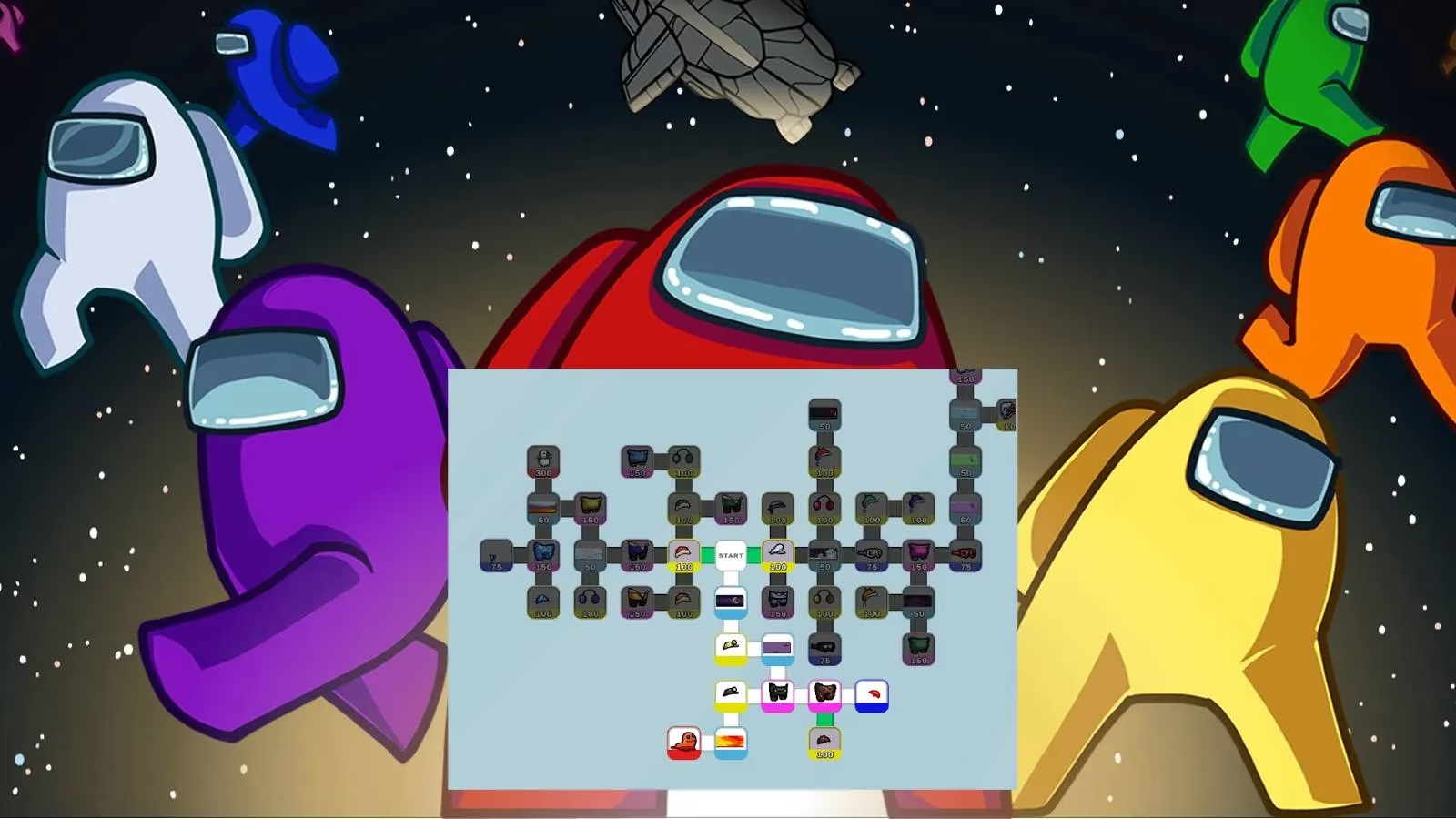
Traditional battle passes, popularized by titles like Fortnite, often march players down a single linear track. Each season brings a themed set of rewards, and if you don't finish in time, those exclusive hats or emotes vanish—hello, FOMO. Innersloth tossed that script out the airlock. Cosmicubes function more like a map of possibilities. Each cube contains a branching tree of items, letting players pick which cosmetic path to follow. Instead of being funneled into a forced progression, crewmates decide: do I want the cheeky pirate hat first, or should I rush that neon visor?
The currency system keeps things casual. Pods—the resource tied to a specific active Cosmicube—only drip in while you're playing with that cube equipped. Every round earns XP, and each level-up boosts the multiplier for both Pods and Beans (the free currency earned through normal gameplay). It's a gentle nudge to keep playing, never a frantic race. Yep, you read that right—no expiration dates, no seasonal lockouts. A Cosmicube you started in 2021 can still be chipped away at in 2026, and that's exactly how some devoted fans have curated their look.
Separate Free and Paid Tracks, Zero Guilt
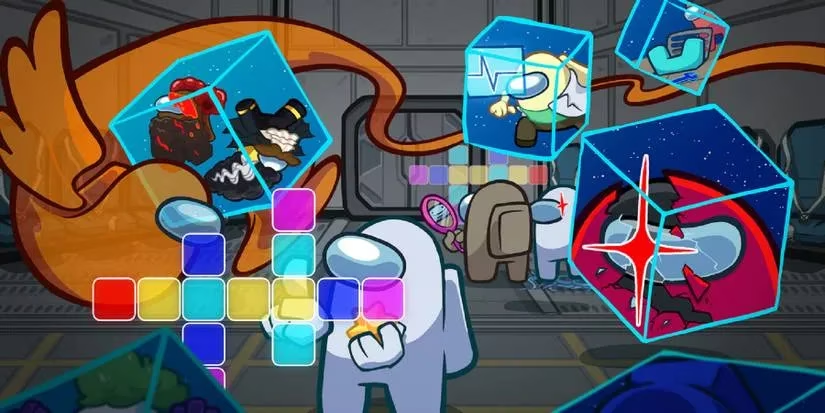
Here's where Innersloth's design really shines—and where many live-service games still fumble. Cosmicubes come in two flavors: those activated with Stars (premium currency) and those activated solely with Beans (earned in-game). Both types share the exact same structure of branching rewards, Pod multipliers, and visual-only items. There's no diminished free tier that makes non-paying players feel like second-class crewmates. If you can't afford to drop cash, you can still grab a free Cosmicube, earn Pods, and deck out your character. Innersloth even said the paid tracks exist primarily to keep servers humming and fund future updates, especially since the mobile version is free and the PC/Switch edition costs less than a fancy coffee.
Let's face it—nobody likes being reminded they're stuck with the default skin while others flaunt season-exclusive gear. By splitting the free and paid experiences into entirely separate cubes, Among Us sidesteps that sting. A player running a Bean-activated cube sees a full, satisfying tree of options, not a locked-out reminder of what they're missing. It's a small psychological shift, but boy does it reduce that exhausting FOMO spiral. Other indie darlings like Deep Rock Galactic moved toward seasonal passes that became permanent, but Among Us went further by never gating parts of a single pass behind a paywall in the first place.
Why the Industry Took Notes (and Some Still Haven't)
When the Cosmicube update dropped, the game was already on a rocket ride: mobile, PC, and Switch were thriving, and console ports for PlayStation and Xbox were just weeks away. The developer's decision to build a monetization system that respects player time while still supporting ongoing development felt almost rebellious in 2021. Fast forward to 2026, and we've seen an influx of small—and even mid-sized—studios adopting similar philosophies. Multiple simultaneously active reward tracks, permanent accessibility, and a clean separation between free and premium content are no longer experimental. Yet some big-name titles still cling to expiring battle passes that weaponize urgency.
Innersloth's approach also left the door wide open for collaborations. Without a rigid seasonal theme locking every reward into one box, it became easy to drop themed cubes for crossovers like Ratchet & Clank or indie partners. Free cubes might lean toward simpler patterns, but paid ones could dive into extravagant, licensed styles—and both exist in harmony. The crewmates themselves seem to wink at the clever design: they never pressure you, but they're always ready to party when you are.
A Battle Pass That Feels Like Play, Not a Job
Cosmicubes are often compared to a relaxed garden path rather than a treadmill. You plant a cube, water it with play, and slowly harvest the looks you want. There's no frantic scramble at the end of a season, no calculator to check if you can reach tier 100 before the reset. The crewmate who logs in once a week for a few rounds of deception can make progress alongside the daily grinder—just for different rewards. Plus, everything remains purely visual. No gameplay advantage hides behind a paywall, which keeps the social deduction fair. Seriously, it's a breath of fresh air.
Looking back from 2026, the Cosmicube experiment stands as a testament to what happens when a developer sees its community as friends, not just wallets. Innersloth took the spotlight gifted by a pandemic boom and used it to build something sustainable—and genuinely kind. The beans and pods might look like silly little currencies, but they carry a bigger message: games can ask for support without twisting arms. With hidden role games still popping up regularly, many could learn a thing or two from a spaceship full of colorful impostors.