
You know, looking back at the horror games I've played over the years, there's always been something special about the monsters. They're the heart of the fear, right? And among all the creatures that go bump in the digital night, werewolves hold a unique place. They're familiar, almost comforting in their classic mythology, but that's exactly why developers love to twist them. As a player in 2026, I've seen this trend evolve from simple reskins to full-blown narrative reinventions. It's not just about a guy turning furry under a full moon anymore; it's about using that iconic template to tell new, terrifying, and often deeply human stories.
Let me walk you through some of the standout examples that have really shaped how I see these beasts in games today.
The Resident Evil Reimagining: More Than Just Fur and Fangs
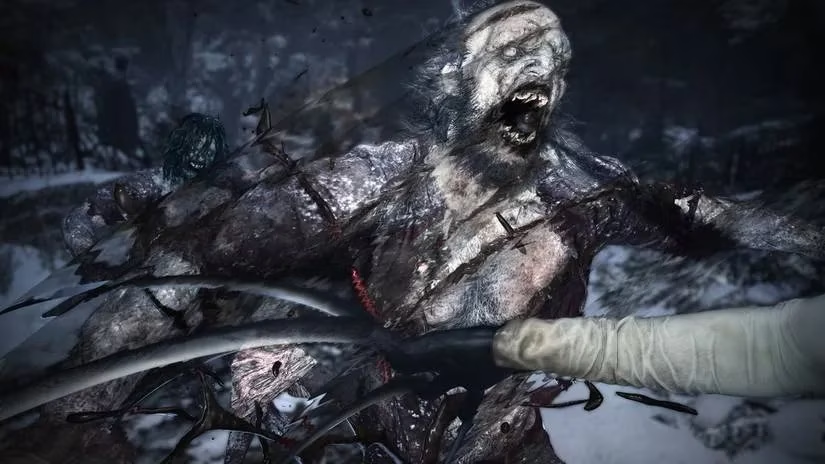
When I first encountered the Lycans in Resident Evil: Village, I thought, "Okay, classic werewolves." I was so wrong. Capcom brilliantly used the familiar silhouette—the hunched posture, the claws, the predatory gaze—but then grafted it onto their own universe's rules. These aren't cursed men; they're biological abominations, mutants created by the megamycete mold. Their weakness isn't silver; it's the same vulnerabilities as any other Resident Evil bioweapon. This approach completely reframed the threat for me. It wasn't a supernatural curse I was fighting, but a horrific consequence of human (or in this case, Mother Miranda's) experimentation. It made the fear feel more... tangible, and in a weird way, more plausible.
Choice, Consequence, and Cures in The Quarry
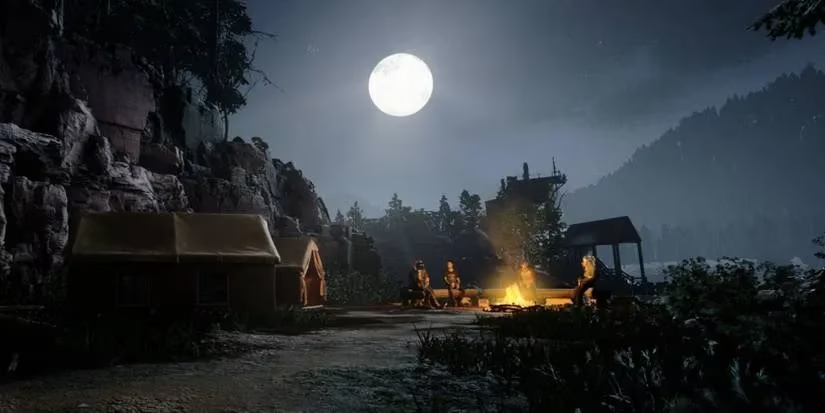
Then there's The Quarry. Supermassive Games took the summer camp slasher trope and injected it with a potent dose of lycanthropy. What fascinated me here was the lore. This game introduced the idea of a cure. In most stories, becoming a werewolf is a life sentence, a one-way ticket to monster town. But in The Quarry, that glimmer of hope—or the tragic failure to achieve it—becomes a central driving force for the characters and the player's choices. The werewolves themselves are visually distinct, less like traditional wolves and more like grotesque, feral humanoids. The game plays with the idea of identity and infection in a way that feels very modern, asking: if you could cure the beast within, what would you sacrifice to get it?
A Sheriff in a World of Fables
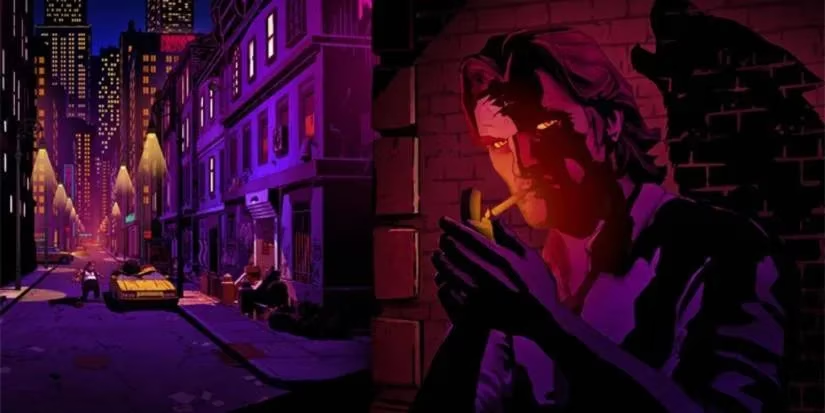
Telltale's The Wolf Among Us will always have a special place in my heart. It flipped the script entirely by making the werewolf, Bigby Wolf (the Big Bad Wolf himself!), the protagonist and sheriff. This wasn't a story about hunting a monster; it was a noir-style mystery where the monster was the detective. The game explores the struggle of living with a monstrous past and a dangerous nature in a society that fears you. Bigby's constant battle to control his temper, to use logic over brute force, made the werewolf curse a metaphor for anger, trauma, and the struggle for redemption. It was a powerful character study that proved these creatures could carry a narrative from the inside out.
Steampunk Lycans and a War for Humanity
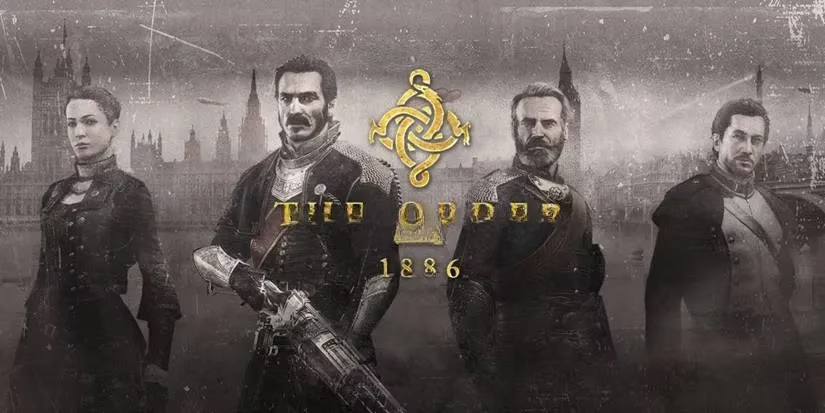
The Order: 1886 presented a fascinating alternate history where the Lycan threat was part of a centuries-old war. These weren't random cursed individuals; they were an evolved offshoot of humanity, a separate species. The game's blend of steampunk technology and gothic horror created a unique aesthetic. The Lycans here felt like an organized, ancient enemy, more akin to vampires in a feudal hierarchy than the isolated, tragic figures of classic lore. The bite could transform, but the result was a loss of humanity, creating a clear "us vs. them" dynamic that fueled the game's conflict. It was a great example of building a whole world where the werewolf mythos was a foundational pillar of society.
Modern Twists on the Hunt
The innovation doesn't stop with big-budget titles. Smaller games have pushed the genre in brilliant, atmospheric directions.
- Werewolf the Apocalypse: Heart of the Forest: This text-based RPG is all about internal horror. You play as Maia, unraveling a family mystery tied to an ancient forest. The werewolf here is less a physical monster to fight and more a spiritual legacy to understand. It's about ecology, ancestral guilt, and personal discovery, using the werewolf as a conduit for these deeper themes.
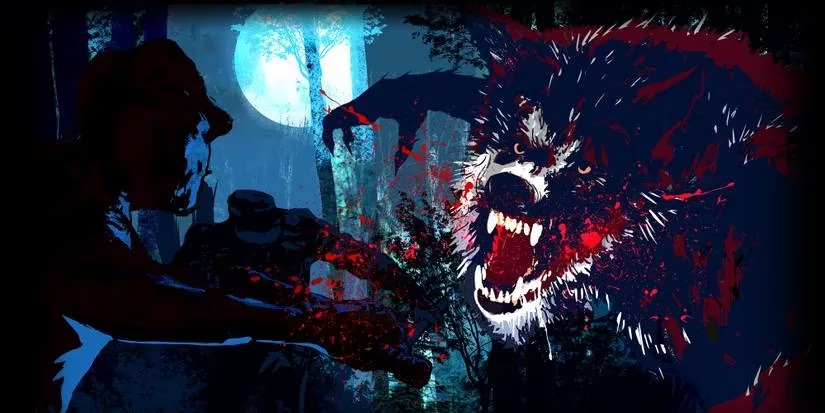
- Witch Hunt: This game turns you into the hunter in a bleak, 18th-century wilderness. The werewolf is one of many monsters you track. The twist? The tension comes from the hunt itself—the tracking, the preparation, the moment the tables turn and you become the prey. It emphasizes atmosphere and vulnerability over power fantasy.
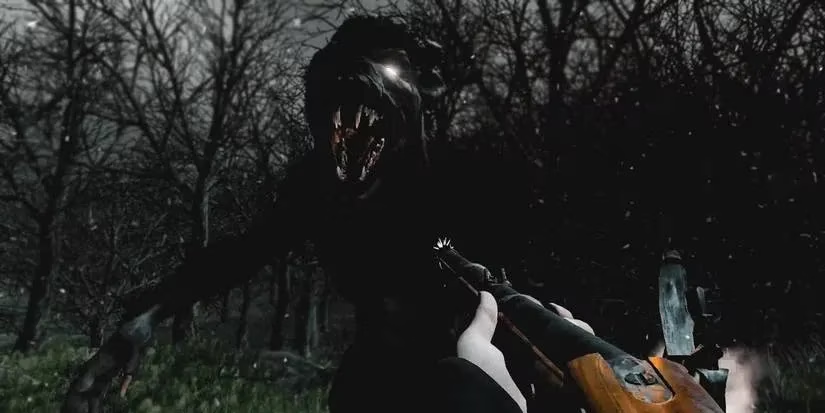
- Overcast: Walden and the Werewolf: This is pure, bleak revenge. You're the last man standing after a massacre, driven by grief and rage. The werewolf is almost a force of nature, a target for your fury. The focus is on the emotional state of the hunter, making the monster a mirror for his despair.
Why This Evolution Matters
So, why are developers so obsessed with re-tooling the werewolf? I think it's because the core concept is so flexible.
| Classic Trope | Modern Reinvention | Example Game |
|---|---|---|
| Cursed Individual | Biological Mutation / Genetic Legacy | Resident Evil: Village, The Order: 1886 |
| No Cure | A Potential Cure Exists | The Quarry |
| Monster to be Feared | Protagonist with Inner Conflict | The Wolf Among Us |
| Supernatural Origin | Ecological / Ancestral Connection | Werewolf the Apocalypse |
It can be a metaphor for so many things: the beast within (anger, addiction, mental illness), the fear of the other, the loss of control, or the price of power. By changing the rules—the origin, the cure, the society they exist in—developers can point that metaphorical lens at new themes. In 2026, playing a werewolf game isn't just about surviving the night; it's about engaging with a complex idea that's been thoughtfully adapted to challenge our expectations. The howl in the distance isn't just a warning of a monster attack; it's an invitation to explore a new kind of fear. And honestly, as a horror fan, I can't wait to see what twist they come up with next. 🐺