
I still remember firing up the first Injustice: Gods Among Us back in the day and having my jaw hit the floor. Watching Superman turn into a full-blown tyrant after the Joker’s cruelest trick was one of those comic book moments that just sticks with you. When the animated movie finally landed in 2021, I was hyped—but also a little nervous. How would they cram years of storytelling into a feature-length runtime? Well, they didn’t just trim the fat; they tossed out half the ingredients and baked a whole new cake. Even now in 2026, with Injustice 3 rumors still swirling, I find myself replaying the movie and noticing fresh tweaks every time. Let me walk you through the biggest changes, and trust me—some of them come completely out of left field.
The Voice Cast: Legends vs. Screen Newbies
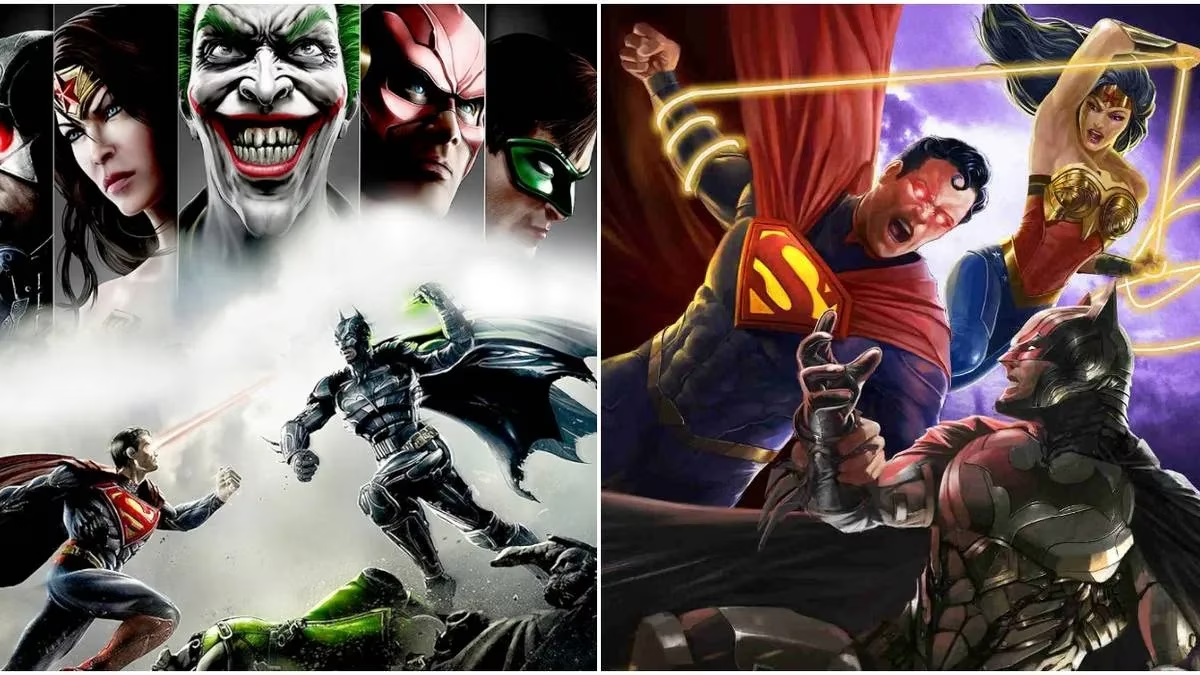
In the games, the voices are the characters for a generation of fans. Kevin Conroy, George Newbern, and Susan Eisenberg—these veterans practically breathed life into the DCAU and carried that gravitas into the NetherRealm brawlers. The movie, on the other hand, brought in Justin Hartley, Anson Mount, and Janet Varney, mostly screen actors who hadn’t inhabited these roles before. I won’t lie, it took my ears a solid twenty minutes to adjust. They do a fine job overall, but there’s something almost unsettling about hearing Superman without Newbern’s iconic cadence. It’s like meeting an old friend who’s suddenly got a completely different laugh.

The Flash: Gone in a Flash (Literally)
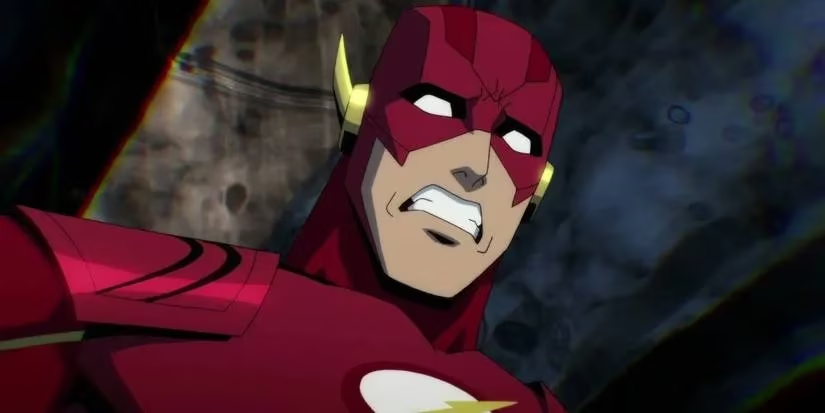
Okay, this one made me pause the movie and mutter “seriously?” at my screen. Right out of the gate, the Flash gets decapitated in one of Joker’s traps, and he stays dead for the entire runtime. In the games, the Scarlet Speedster is a pivotal figure who defects from Superman’s regime and aids Batman at critical moments. Axing him so early feels like a narrative gamble that doesn’t fully pay off—it closes the door on a fan-favorite arc and leaves a Barry Allen-sized hole in the resistance. I guess they needed to shock us, but boy, did it hurt.
Fresh Blood: Mr. Terrific and Plastic Man Step Up
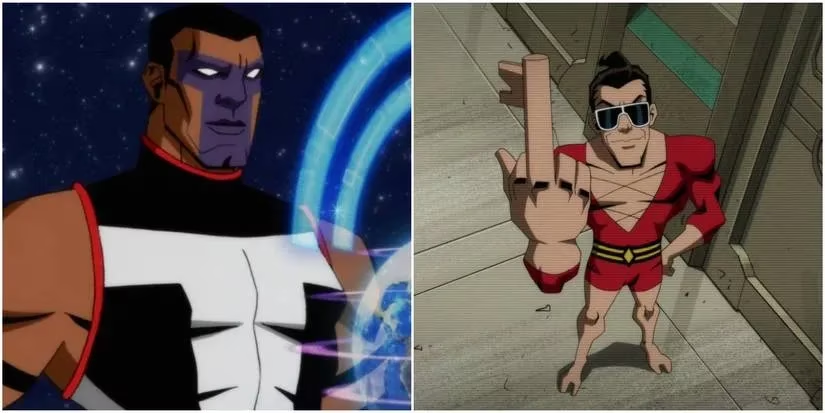
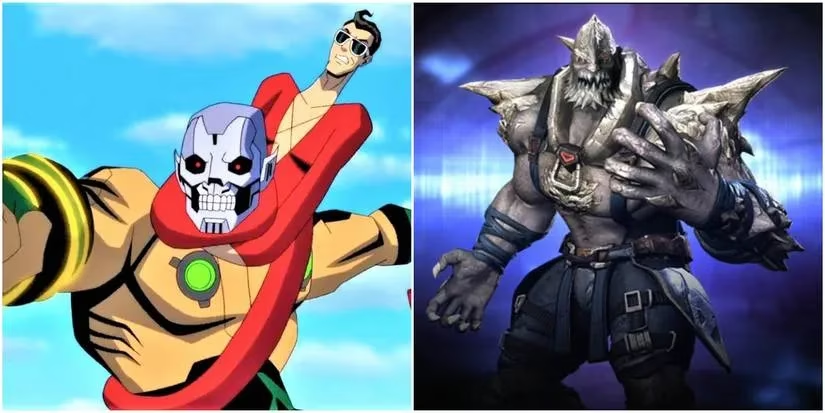
With Flash sidelined, the movie makes room for some new faces. Mr. Terrific and Plastic Man were nowhere to be found in the games, but here they’re essential to Batman’s plans. I actually dig this addition—Terrific’s intellect and Plaz’s goofy infiltration skills add a welcome layer of unpredictability. Superman even weaponizes the T-spheres for surveillance, which is a logical, creepy extension of his Big Brother tactics. Still, it’s a little odd seeing these B-listers suddenly fill spots that belonged to core Leaguers in the source material.
Superman’s Downfall: A Slow Burn Instead of a Flicked Switch
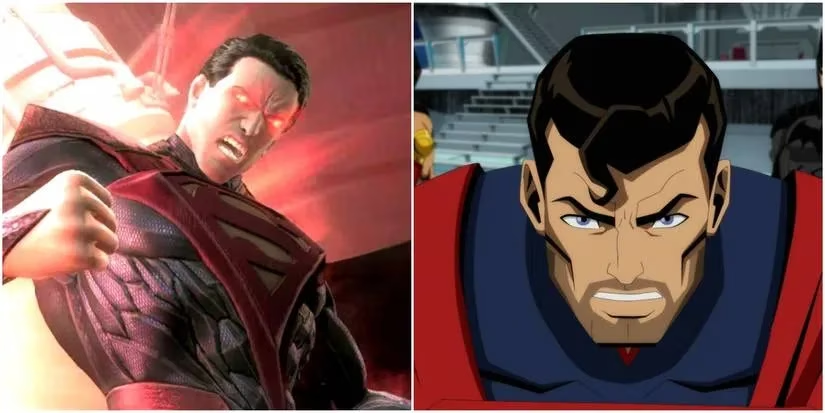
Here’s where the movie, in my opinion, outshines the games. In the interactive version, Big Blue kills Joker and then basically throws a switch—suddenly he’s rounding up criminals in Arkham and killing anyone who opposes him without much reflection. The film gives us a gradual descent. He tries to hold onto his nonviolent code, but mounting resistance from world leaders, former friends, and even civilians pushes him further and further. Each setback chips away at his humanity until the dictator is all that remains. It’s a way more believable—and heartbreaking—transformation.
Wonder Woman: Enabler with a Conscience
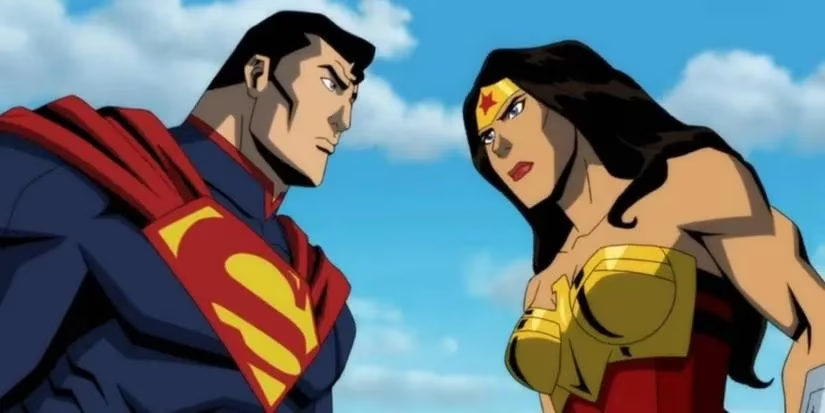
In the games, Wonder Woman is practically the devil on Superman’s shoulder, pushing him toward conquest and even trying to become his rebound romance. She’s unrepentant to the point of villainy. The film initially follows that path, but then draws a line I never expected. When Superman slaughters a group of young Joker loyalists and later targets his own allies, she breaks from him completely. It adds a flicker of the true Diana back into her character—she’s still a warrior, but not a monster. Honestly, it was a relief to see her walk away instead of doubling down on the madness.
Catwoman: From Regime Spy to Heartfelt Support
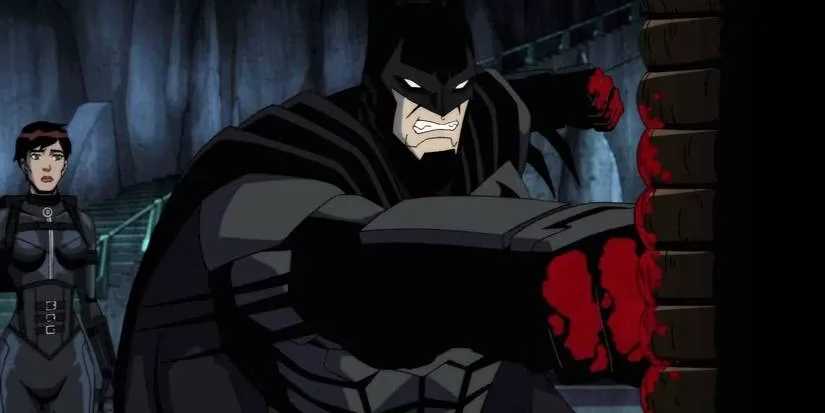
If you played the first game, you might remember Catwoman bizarrely siding with Superman’s regime before redeeming herself in the sequel. The movie skips the villainous detour entirely. Here, she’s a steadfast ally to Batman from the start, even providing emotional support after Nightwing’s death. What adds a lump to your throat is that Superman prompts her to be there for Bruce, knowing his old friend will need someone. It’s a small, humanizing beat that reminds us these two were once brothers in arms.
Damian Wayne: Accidental Killer, Genuine Remorse
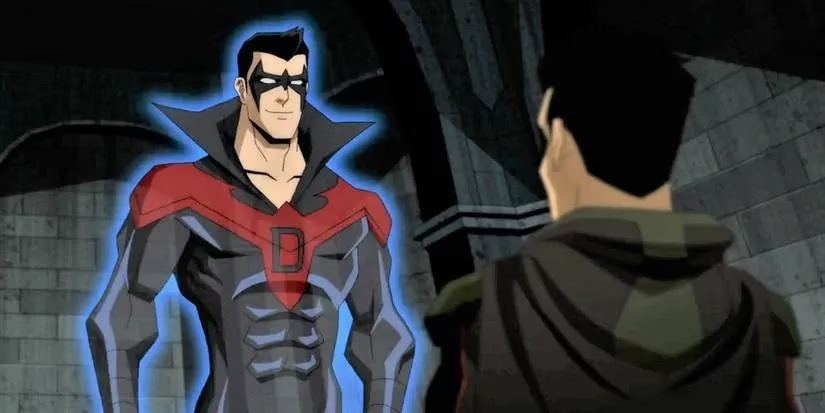
Damian killing Nightwing is one of those gut-punch moments both mediums share, but the aftermath couldn’t be more different. In the games, the little assassin feels zero remorse and leans fully into Superman’s regime. The movie, however, makes the death accidental. Damian is visibly shattered by what he’s done, and that guilt leads him to see the error of his ways. I never thought I’d say this, but movie Damian actually made me feel sympathy for the brat. That reconciliation with Nightwing’s spirit? Genuinely touching.
Doomsday Out, Amazo In: The Brick Gets Replaced
The game’s dark irony—Superman, tricked into seeing Lois as Doomsday, later brainwashes the real Doomsday into his service—is completely missing from the film. Instead, we get Amazo, a power-copying robot designed by Ra’s al Ghul. It’s a cool visual concept, but the thematic punch is gone. Plus, Amazo predictably turns on its master, which feels like a less nuanced echo of the game’s hypocrisy. Maybe Supes should have stuck with the grey monster after all.
The Multiverse Takes a Backseat (Until the End)
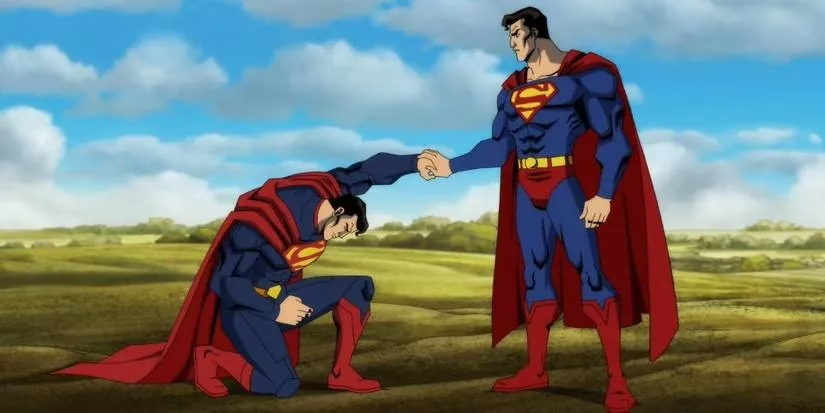
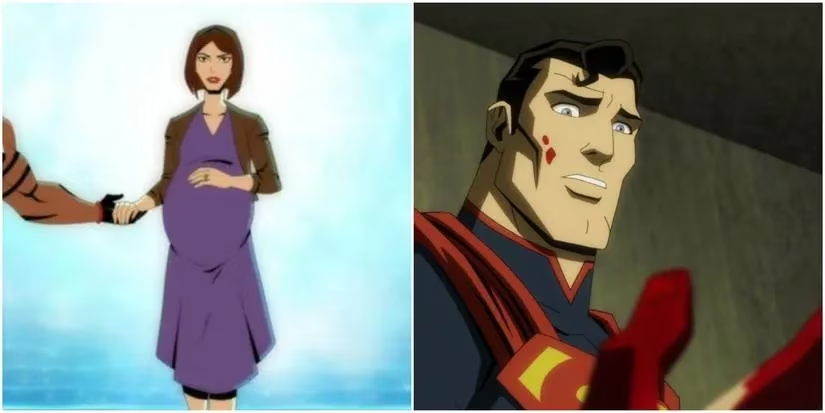
The games leaned hard into Elseworlds shenanigans, with prime-universe heroes (and a whole Green Arrow) getting dragged into the dystopia. The movie mostly keeps the story grounded in its own bleak reality—characters mention the Multiverse in passing, but it’s not a free-for-all crossover. That is, until the climax, when a heroic Superman from another Earth shows up to fight his tyrannical self, and a pregnant Lois from yet another universe delivers the emotional knockout. It’s a tighter, more personal use of the concept that trades chaotic fan service for genuine pathos.
A Softer Ending: The Power of Lois’s Words
If you remember the game’s finale, it’s an all-out brawl leading to Superman being locked in a red-sun prison. The movie swaps fisticuffs for a conversation. When the alternate Lois asks how many people need to die in the name of peace, and tells her fallen lover how his counterpart cherished life, something clicks. Superman renounces his mission and basically turns himself in. It’s probably not as satisfying for players who wanted a boss fight, but emotionally? It lands like a freight train. It makes you wonder why no one thought to bring Lois in sooner—like, from the very start.
All these years later, I still go back and forth on which version tells the story better. The games gave us the operatic scale and a roster of deep-cut fighters, but the movie’s character-driven tweaks—especially Superman’s slow fall and Damian’s guilt—give it a soul the interactive brawler sometimes lacked. If we ever do get that Injustice 3, I hope it steals a few notes from its animated sibling. After all, the best adaptations don’t just mimic; they refine.