
Alright, gather 'round the flickering candlelight, fellow gamers and bookworms. Let's chat about something that gets my gaming heart racing faster than a chase scene in a haunted castle: video games that decided to raid the dusty shelves of Gothic literature. I mean, come on—these stories have been giving people the creeps for centuries with their vampires, tragic romances, and enough existential dread to fill a moat. It’s like the original horror DLC, and game developers have been hitting the "download" button for decades. Some games just borrow the general vibe—you know, the cobwebs and the constant feeling of being watched—while others go full fan-fiction, directly adapting specific tales. For us lovers of the spooky and the sublime, these games are a match made in a very gloomy, possibly cursed, heaven.
Let's start with a blast from the past that's so old-school, it practically has pixelated cobwebs. I'm talking about Frankenstein: Through the Eyes of the Monster (1995). Now, don't get me wrong, this point-and-click FMV adventure isn't winning any GOTY awards in 2026. But holy voltage, it's got Tim Curry as Victor Frankenstein, and his performance is so brilliantly unhinged, it could power a small village. You play as the Creature itself, and let me tell you, Mary Shelley's original novel would probably need a stiff drink after seeing this adaptation. The game takes more inspiration from the classic Universal monster movies than the book, swapping Shelley's deep thoughts on human arrogance for a... well, let's just say a very unique psychosexual adventure. It's a prime example of "adaptational decay," but for Gothic completists, it's a must-play. I mean, Tim Curry!
Now, let's wade into the murky, sanity-draining waters of H.P. Lovecraft. Call of Cthulhu (2018) is like the gateway drug to cosmic horror. It's a story-heavy RPG that name-drops the famous short story but really just raids the whole Lovecraftian pantry. The real star here is the branching dialogue, where your choices feel like they genuinely matter as you slowly piece together mind-shattering truths. It's the first of two games born from the tangled web between Frogwares and Focus Home Interactive, and it shares a lot of DNA with its more famous sibling...
...which brings me to The Sinking City. If Call of Cthulhu is the gateway drug, this is the full-blown, mind-bending trip. In my 2026 replay, this third-person open-world shooter still holds up as possibly the best use of Lovecraft's extended canon in gaming. You're detective Charles Reed, investigating a city drowning in secrets (and water). The game is littered with Easter eggs from Lovecraft's stories—like the utterly bonkers Facts Concerning the Late Arthur Jermyn and His Family—and its sanity system is a brave attempt to translate "cosmic dread" into a game mechanic. Unraveling the mystery of Oakmont is a slow, delicious descent into madness. Good stuff.
But Gothic horror isn't all tentacles and fish-people. Sometimes it's a misunderstood creature wandering through a watercolor nightmare. Enter The Wanderer: Frankenstein’s Creature (2019). This puzzle game is the polar opposite of the Tim Curry version. It’s a faithful, beautiful, and heartbreaking exploration of the Creature's perspective directly from Shelley's text. You guide its destiny through 18 stunning painted backdrops. It's less about challenging puzzles and more about the experience—bittersweet, strangely hopeful, and an absolute feast for the eyes. Playing this feels like interactive art, and it hits you right in the feels.
Switching gears to a genre mash-up I never knew I needed: fairy tales meet film noir with a dash of Gothic. The Wolf Among Us is a masterpiece of storytelling, pulling characters from Grimm's fairy tales and urban legends. But from our Gothic lit perspective, one sniveling standout is Ichabod Crane, ripped straight from Washington Irving's The Legend of Sleepy Hollow. He's just as unlikeable and manipulative here as in the original story. The game is phenomenal, but if you're looking for a pure Gothic adaptation, this is more of a brilliant cameo appearance.
Speaking of brilliant worlds steeped in reference, let's talk Dishonored. No, Corvo Attano isn't quoting poetry mid-assassination, but the series is dripping with Gothic love. There's a grim nod to Edgar Allan Poe's The Masque of the Red Death that genuinely made me pause my stealth run. The art style, inspired by Victorian London, lets all sorts of macabre details seep in. It’s a world built by people who clearly adored the genre, even if the protagonist is more about silent takedowns than soliloquies.
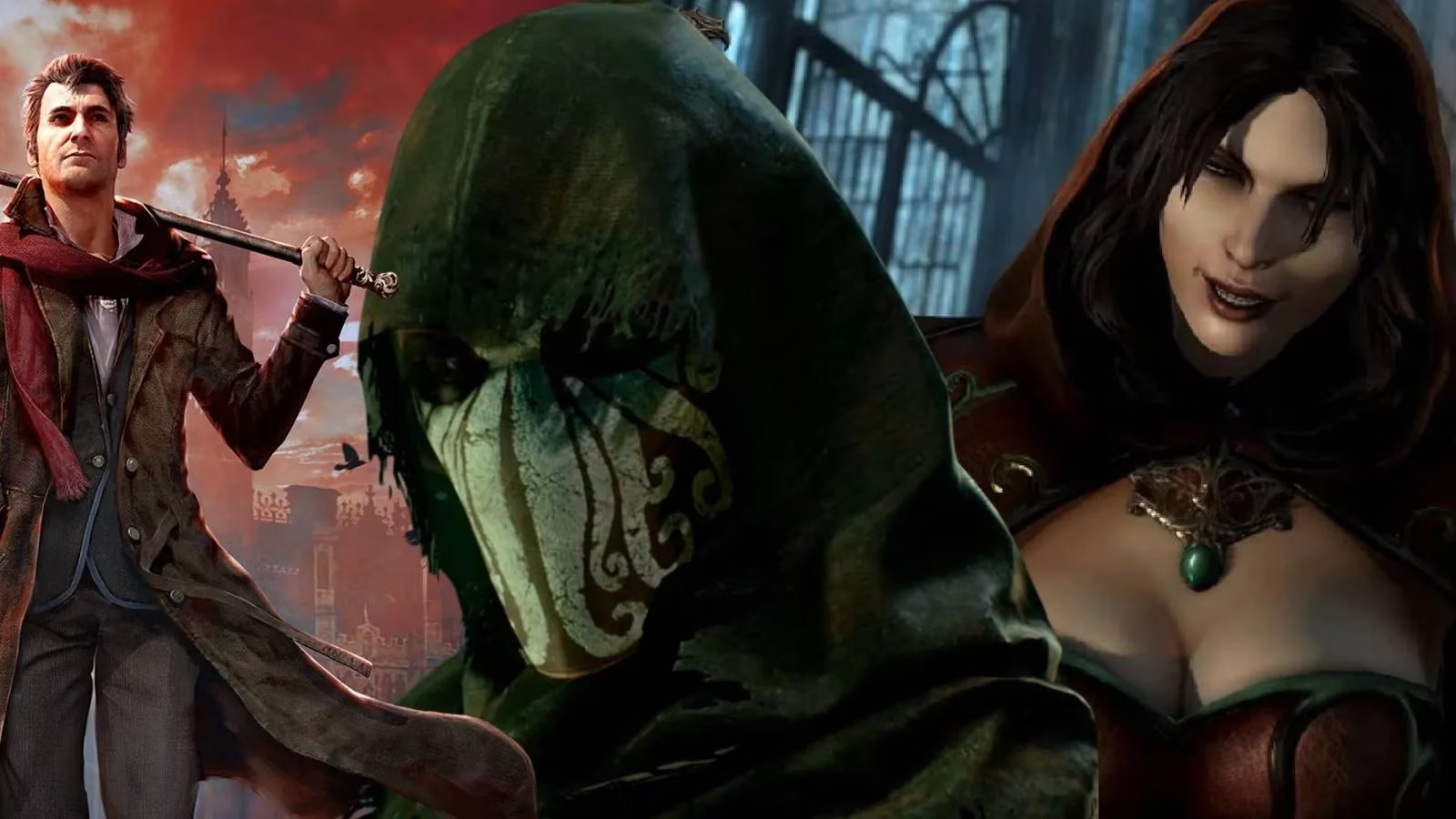
Now, for the detective who never rests, even in video games: Sherlock Holmes. Arthur Conan Doyle's stories aren't all Gothic, but when they are—The Hound of the Baskervilles, I'm looking at you—they define Gothic detective fiction. Frogwares has been the king of Holmes games for years, crafting third-person adventures where you solve puzzles as the great detective. The cool part? They've even woven supernatural elements from other literary works into Holmes's staunchly logical world, creating a fantastic genre blend. In 2026, their legacy in adapting literary giants is stronger than ever.
Finally, we have to pay respects to the granddaddy of Gothic action games: Castlevania. This series doesn't just borrow from Gothic literature; it throws a party and invites every famous monster. Obviously, Dracula is the headliner, but let's give it up for Carmilla. She's the vampire queen who predates Dracula by over 20 years, from J. Sheridan Le Fanu's foundational novella. Seeing her and other classics like Frankenstein's Creature and Dr. Jekyll/Mr. Hyde show up as bosses is a book nerd's dream come true. It’s a glorious, whip-cracking celebration of the entire Gothic canon.
So there you have it, my fellow midnight gamers. From FMV curiosities to open-world horror and side-scrolling classics, Gothic literature continues to be the ultimate source code for some of our spookiest, most intriguing adventures. These games are more than just spooky fun; they're a bridge between centuries of storytelling, introducing old horrors to new audiences. Now if you'll excuse me, I think I hear something howling in the digital moat... time to load up a save. 😉