
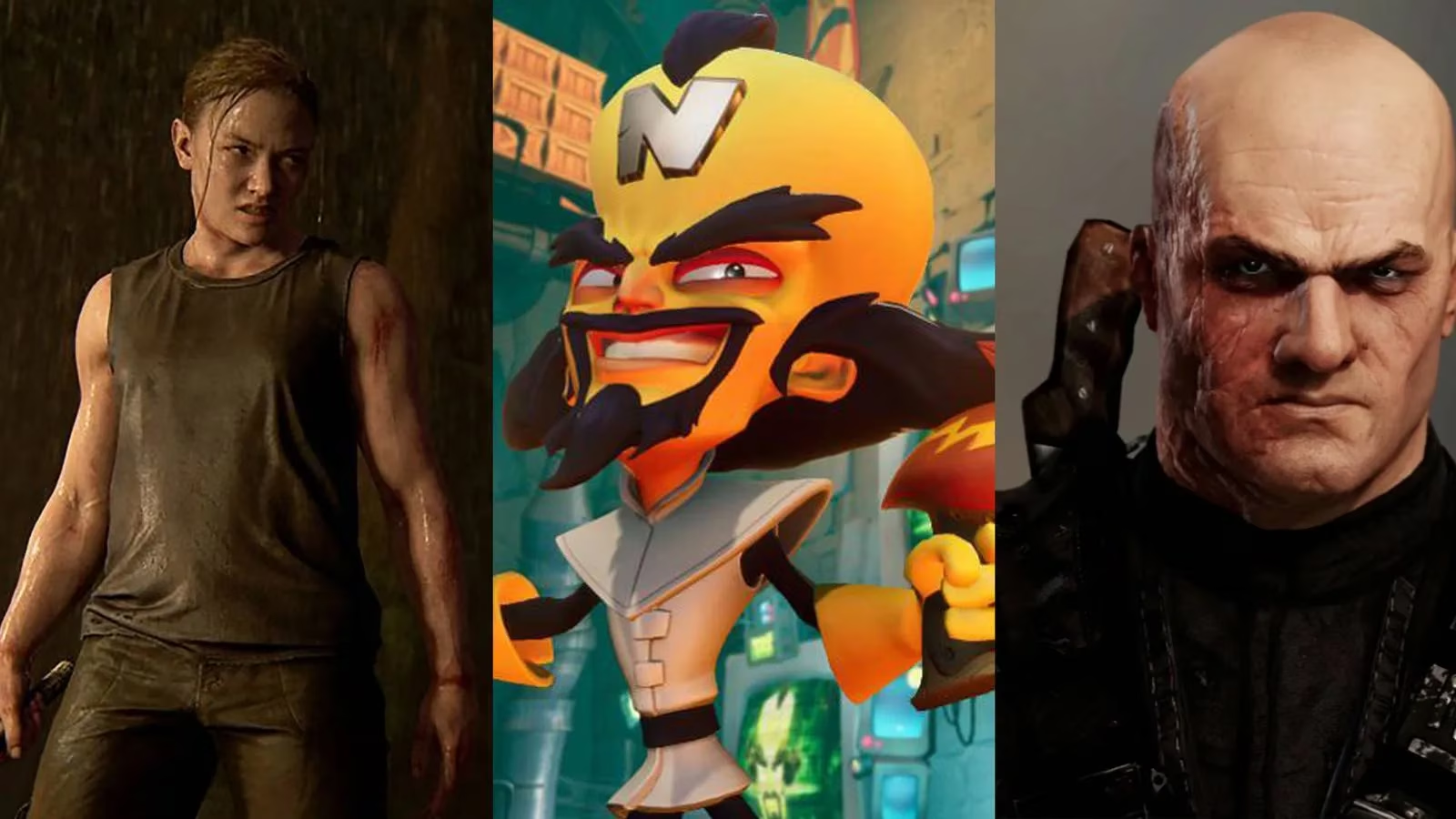
For over three decades, Naughty Dog has not just created iconic heroes but has meticulously crafted a rogue's gallery of villains that are as integral to their storytelling as the protagonists themselves. From the whimsical chaos of the Crash Bandicoot universe to the morally gray, post-apocalyptic landscapes of The Last of Us, the studio's antagonists have evolved from cartoonish obstacles into deeply nuanced characters who challenge players' perspectives and elevate narrative stakes. This evolution mirrors the studio's own journey from platformer pioneer to narrative powerhouse, with its villains serving as dark mirrors to its heroes and as complex entities in their own right.
🦹 The Cartoonish Foundations: Crash Bandicoot's Rogues' Gallery
The early years of Naughty Dog were defined by vibrant, chaotic energy, much of which was channeled through the antagonists of the Crash Bandicoot series. These villains were like the garish neon signs of a 90s arcade—immediately recognizable, purposefully over-the-top, and designed to be fun obstacles rather than deep psychological studies.
Dr. Neo Cortex stands as the archetypal mad scientist, the foundational pillar upon which Crash's world was built.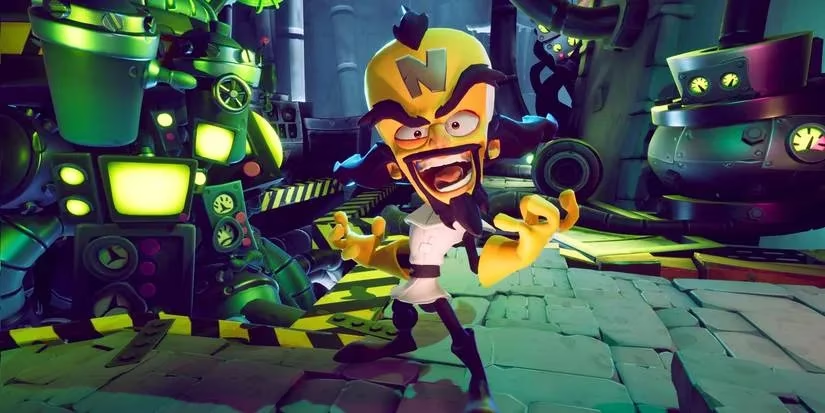 His role is akin to the conductor of a chaotic symphony of animal mutants, with Crash as his greatest failed experiment turned perpetual nuisance. Cortex's genius is constantly undermined by his own arrogance and the sheer, stubborn resilience of the bandicoot, creating a classic dynamic of brains versus brawn.
Then there is Dingodile, a character who embodies the series' playful absurdity. A bizarre hybrid of dingo and crocodile wielding a flamethrower, he is a villain whose menace is undercut by a strange sense of honor. 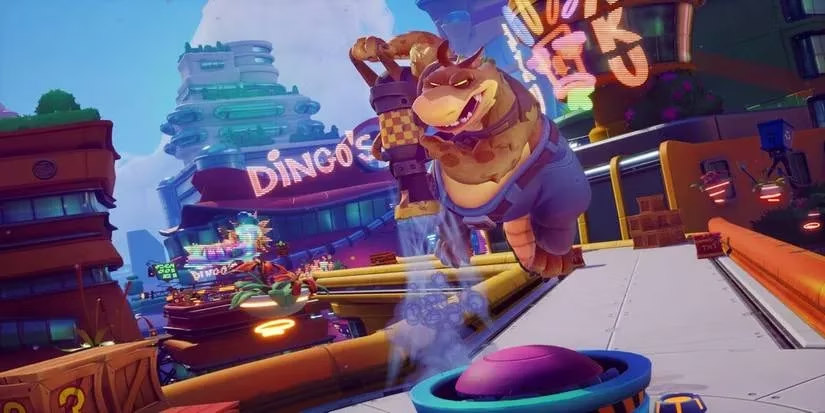 His evolution from a boss enemy in Crash Bandicoot: Warped to a playable anti-hero in later titles like Crash Team Racing demonstrates Naughty Dog's early willingness to blur the lines between friend and foe, a theme they would later explore with profound depth.
| Villain | Debut Game | Primary Trait | Legacy |
|---|---|---|---|
| Dr. Neo Cortex | Crash Bandicoot (1996) | Megalomaniacal Genius | The defining arch-nemesis, gaming's mad scientist icon. |
| Dingodile | Crash Bandicoot: Warped (1998) | Honorable Mercenary | Fan-favorite who transitioned to playable anti-hero. |
🗺️ The Cinematic Shift: Uncharted's Global Threats
With the Uncharted series, Naughty Dog's villains shed their cartoon shells and stepped into the spotlight as formidable, worldly antagonists. They became the dark reflections of Nathan Drake's own ambitions, often sharing his thirst for legendary treasure but corrupted by limitless greed or a thirst for power.
Zoran Lazarević from Uncharted 2: Among Thieves is a force of nature. A Serbian war criminal turned mercenary leader, his pursuit of the Cintamani Stone and the city of Shambala is driven by a belief in his own invincibility and destiny. 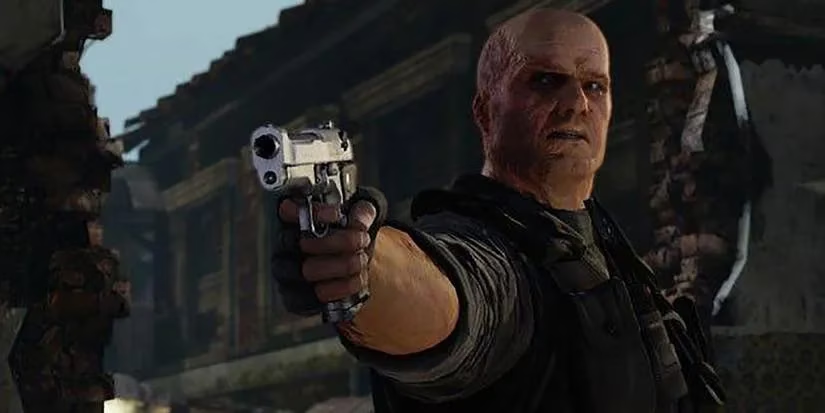 He is less a man and more a humanoid wrecking ball, leaving a trail of destruction so vast he redefines the scale of threat in Naughty Dog's narratives. Defeating him feels less like winning a fight and more like surviving a natural disaster.
In Uncharted 4: A Thief's End, Rafe Adler presents a different, more personal danger. He is Nathan Drake's shadow self—a man of similar skills and background but devoid of Nathan's moral compass and loyalty. 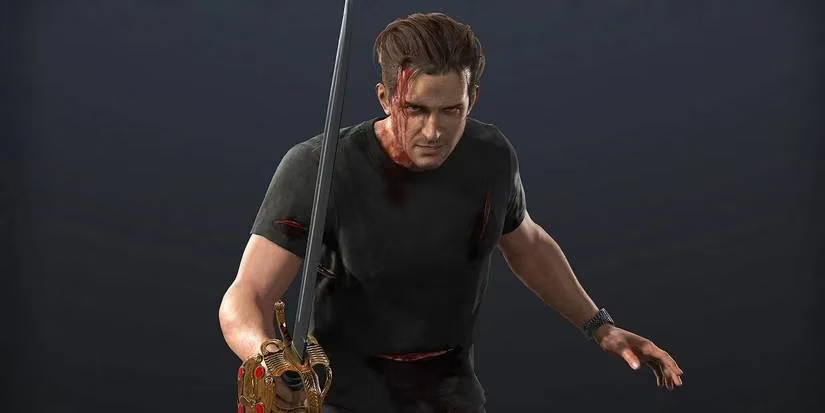 His villainy is born from entitlement and a pathological need to prove he earned his fortune, not inherited it. His final sword fight with Nathan in the burning wreckage of Libertalia is a clash of ideologies as much as it is a physical battle, cementing him as one of the series' most compelling antagonists.
⚫ The Descent into Darkness: Jak II and The Last of Us
Naughty Dog's exploration of darker themes found its first major expression in Jak II. The shift from the bright, collectathon world of the first game to the dystopian Haven City was jarring, and its central villain, Kor, was the enigmatic architect of this gloom. 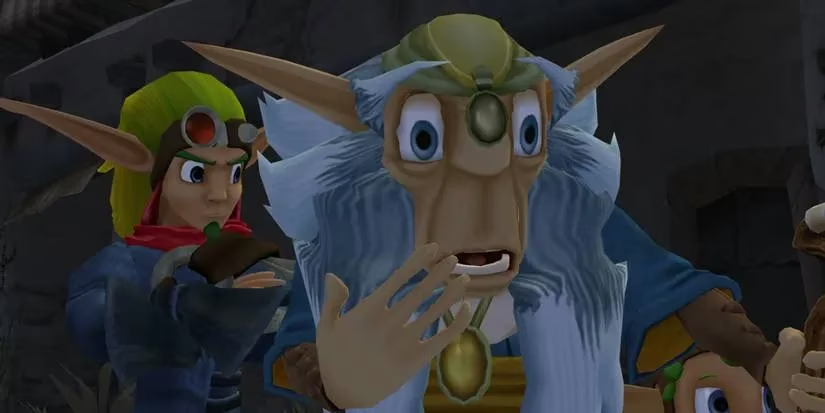 Operating from the shadows like a spider at the center of a metallic web, he manipulated events to overthrow Baron Praxis, revealing a narrative complexity previously unseen in the studio's work. Kor was a signpost, pointing toward the morally ambiguous storytelling that would become a Naughty Dog hallmark.
This evolution reached its apex in The Last of Us series, where the very concept of "villain" was deconstructed. David, from the first game, is a masterclass in minimalist horror. 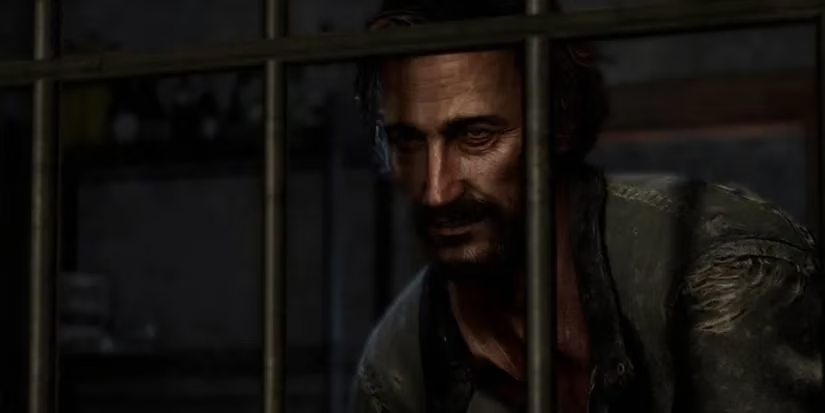 He appears not as a monstrous warlord, but as a calm, persuasive leader whose civilized veneer cracks to reveal a predatory cannibal. His confrontation with Ellie in a snowy restaurant is a pivotal moment of trauma and survival, proving that the most terrifying evils often wear a friendly face.
However, the ultimate challenge to the player's perception came with Abby Anderson in The Last of Us Part II. 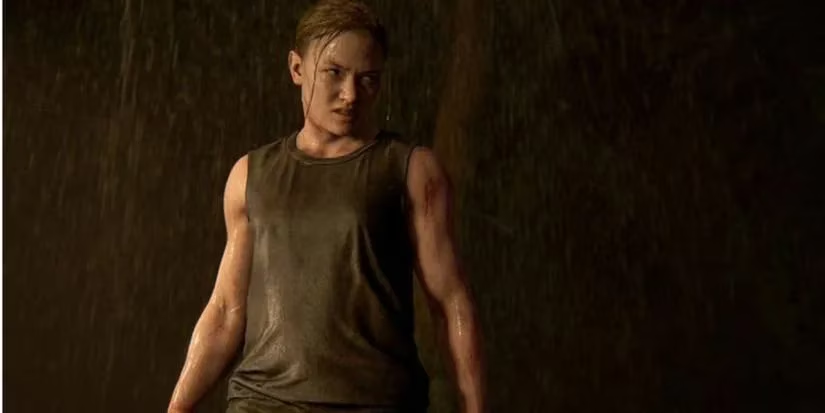 To call her solely a villain is to misunderstand the game's core thesis. She is the protagonist of her own story, a daughter seeking vengeance for a father murdered by Joel. Naughty Dog forces players to walk in her shoes, to understand her pain, her relationships, and her humanity. Abby is the final, devastating step in the studio's villain journey: an antagonist who is also a hero, depending entirely on where you stand. She is like a shattered mirror, each fragment reflecting a different truth about justice, cycle of violence, and empathy.
🔮 The Legacy and Future of Naughty Dog Villainy
As of 2026, Naughty Dog's reputation rests not only on the shoulders of its heroes like Nathan Drake, Ellie, and Joel but equally on the depth of its antagonists. Their villains have transformed from simple boss fights into narrative keystones. This progression can be visualized as an evolution in complexity:
-
Era of Obstacle (1990s): Villains as functional gameplay hurdles (Cortex, Dingodile).
-
Era of Reflection (2000s-2010s): Villains as dark mirrors to the hero's traits (Lazarević, Rafe).
-
Era of Perspective (2020s): Villainy as a subjective concept, dependent on point of view (Abby).
The studio's mastery lies in making players feel the presence of their villains, whether it's the frantic panic induced by Cortex's death traps, the chilling dread of David's calm voice, or the conflicted rage toward Abby. These characters are no longer mere opponents; they are essential components of the emotional and thematic fabric of each game. As Naughty Dog looks to future projects, whether in the world of The Last of Us, a new Uncharted chapter, or an entirely new IP, one expectation remains certain: the foes will be as meticulously crafted, morally complex, and unforgettable as the heroes they oppose. Their legacy of villainy is, in many ways, the true benchmark of their narrative ambition.
Data referenced from PEGI helps contextualize how Naughty Dog’s shift from cartoonish Crash-era antagonists to the harsher moral terrain of The Last of Us aligns with broader industry expectations around age ratings and thematic intensity—where depictions of violence, fear, and psychological threat can fundamentally shape how “villainy” is framed and experienced by players across different eras of game storytelling.