
You know, it's 2026, and I still find myself coming back to social deduction games. Why? Because that heart-pounding tension of trying to figure out who's lying to your face is just timeless, isn't it? Even years after their initial releases, these games have a special kind of magic. They're the perfect digital hangout, easy for anyone to jump into, whether you're a seasoned gamer or just looking for some fun with friends. And let's be real, there's nothing quite like the collective gasp when you catch the impostor red-handed!
Streamers keep these worlds alive too, diving back in for collabs and to engage with their chats. The communities are dedicated, modding scenes are vibrant, and developers often release fantastic updates that keep everything feeling fresh. So, which of these classic deception-based games are still going strong today? Let's dive in.
🚀 First Class Trouble: Sabotage in Space
Ever wondered what would happen if you were trapped on a spaceship with a murderous AI and killer robots disguised as your friends? Well, that's the premise of First Class Trouble! In this game, players are split into "Residents" trying to shut down the evil AI, C.A.I.N., and "Personoids," human-like robots secretly working to help it achieve its goals.

The retro-styled ship is your playground. As a Resident, you'll be running around completing tasks to stop C.A.I.N., all while keeping an eye on your oxygen levels—yes, it's a shared resource, and if it runs out, everyone suffers! The social layer comes from discussions and votes. You have to convince others who the Personoids are and vote them off the ship. But be careful, the Personoids are doing the same, trying to frame the innocent Residents. It's a brilliant mix of task management and pure, unadulterated paranoia.
🦆 Goose Goose Duck: The Unexpected Hit
If you thought the social deduction craze peaked with Among Us, think again! Goose Goose Duck exploded onto the scene and has firmly cemented itself as a top contender. The formula is familiar but wonderfully expanded upon. You're part of a gaggle of geese on a spaceship, but some of you are actually treacherous ducks!

What makes it so engaging? The sheer variety of roles! It's not just geese vs. ducks. You have neutral roles like the Dodo, the Falcon, and the Vulture, each with their own unique and often hilarious win conditions. This adds layers of complexity and unpredictability to every match. The geese must complete tasks or vote out the ducks, while the ducks try to sabotage and eliminate enough geese to win. The constant updates and a super-active community have kept this game feeling vibrant and new years after its release.
🔫 Deceive, Inc.: Spycraft and Social Deduction
Who says social deduction has to be slow and talkative? Deceive, Inc. throws you into the shoes of the world's greatest spies in a thrilling first-person shooter/heist hybrid. The goal isn't just to shoot; it's to deceive.

You can disguise yourself as almost anything—a civilian, a guard, even a toilet!—to blend in with the environment and other players. Your mission is to work with (or against) other teams to breach a vault, steal the objective, and make it to extraction. The social deduction comes from observing behavior. Is that NPC moving a little too purposefully? Is that player lingering near the vault a bit too long? Using gadgets to reveal enemies and outsmarting them with well-timed deceptions is the key to victory. It's a high-stakes game of cat and mouse that rewards clever thinking over pure reflexes.
❄️ Project Winter: Survival and Betrayal
Imagine being stranded in a deadly blizzard. Now imagine some of the people you're stranded with want you dead. Welcome to Project Winter. This game masterfully blends survival mechanics with social deduction. As survivors, you must work together to gather resources, repair equipment, and call for rescue.

But among you are traitors. Their goal is to sabotage your efforts, sow distrust, and pick you off one by one before help arrives. The survival aspect adds a tangible pressure—you need food and warmth to stay alive, which forces cooperation. This makes the eventual betrayal all the more devastating! Traitors have to be cunning, sabotaging quietly and framing others, while survivors must defend themselves and use logic to root out the enemies in their midst. It's a tense, atmospheric experience that truly makes you feel the cold—and the fear.
🎭 Town of Salem: The Classic That Started It All
For many of us, Town of Salem was our introduction to digital social deduction. This browser-based classic is the granddaddy of the modern genre, and it's still going strong thanks to a fiercely dedicated player base and constant updates.
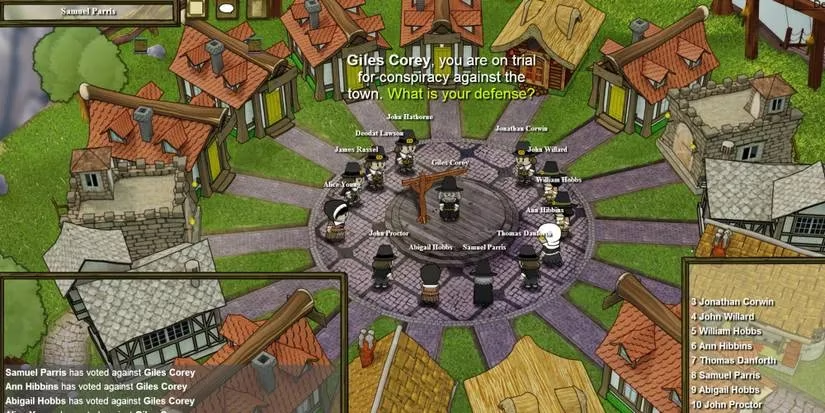
The premise is pure Mafia/Werewolf: players are assigned secret roles aligned with the Town, the Mafia, or Neutral parties. Through a cycle of days (for discussion and voting) and nights (for using secret abilities), you must deduce who the evil players are and eliminate them. What keeps it fresh? A massive roster of unique roles, each with special abilities. From the Investigator who can gather clues to the Serial Killer who works alone, every game is a new puzzle. The introduction of a ranking system and new faction packs has given veterans plenty of reasons to keep playing and strategizing.
🧟 Deceit: A Horror-Infected Nightmare
If you like your social deduction with a heavy dose of horror, Deceit is your game. You and eight other players wake up in an abandoned facility infected with a deadly virus. Some of you are innocent survivors. Others are infected "Terrors" who can transform into monstrous forms at night.
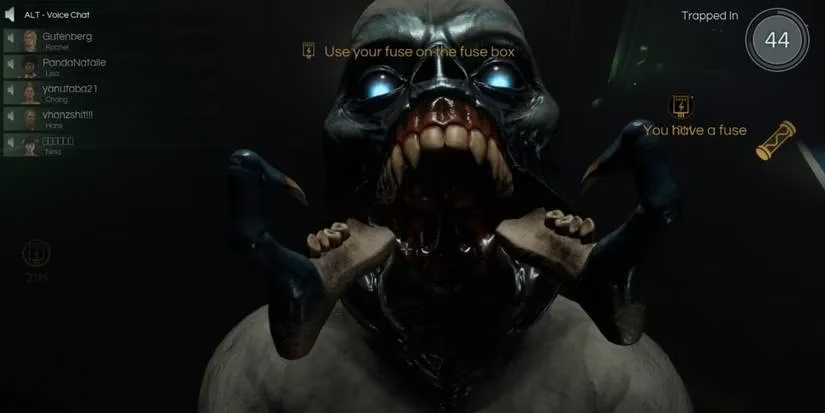
The gameplay loop is intense. During the "light" phases, everyone appears human. You must explore, find weapons and supplies, and complete objectives to escape. But you also have to watch everyone closely. Who is lingering near the blood banks a little too often? (Infected need to consume blood to power their transformations). When the lights go out, the Terrors reveal themselves and hunt. The blend of first-person action, resource management, and psychological deduction creates a uniquely terrifying and addictive experience. Do you trust the person who just gave you a medkit, or were they just trying to lower your guard?
🎉 Jackbox Party Pack 6: Social Engineering Fun
Sometimes you want social deduction without the life-or-death stakes. That's where The Jackbox Party Pack 6 shines. It's a collection of party games, but several are built around understanding your friends' minds.

The standout is Push the Button, a direct Werewolf-style game where players are secretly assigned as humans or aliens. Through a series of mini-tasks and discussions, you have to figure out who the aliens are before they sabotage the ship. The twist? Winning relies less on random deduction and more on how well you know your friends' personalities and "tells." Other games like Role Models and Joke Boat also test your social knowledge in hilarious ways. It's the perfect game for a casual night where you want to laugh and maybe learn which of your friends is a surprisingly good liar.
😈 Feign: Cute, Bouncy, and Deadly
Don't let the adorable, blob-like art style fool you—Feign is a cutthroat game of Mafia. Players are villagers who must vote each day to eject someone they believe is a threat. The factions are classic: Innocents, Impostors, and Neutrals.
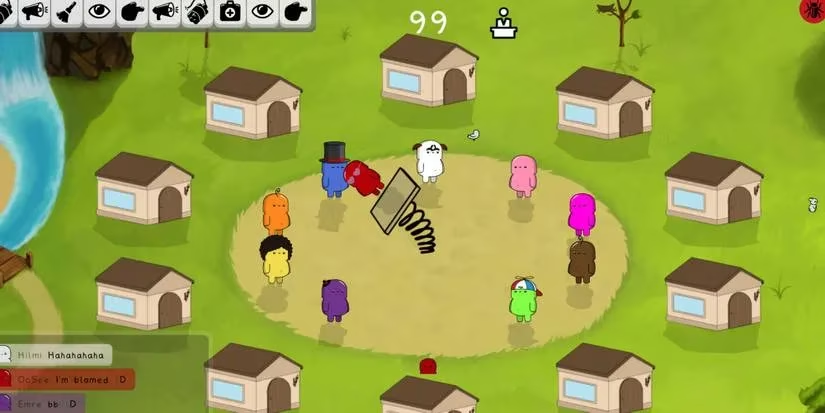
Where it gets interesting is with its unique roles. For example, the Mad role has abilities that do... absolutely nothing, purely to confuse everyone. The Haunter can retaliate from beyond the grave if they get voted out. These twists on the classic formula force players to think outside the box and never take anything at face value. It's a fantastic example of how a simple concept can be endlessly refreshed with creative mechanics.
👨🚀 Among Us: The Cultural Phenomenon
Of course, we can't talk about social deduction without mentioning Among Us. The game that brought the genre screaming back into the mainstream is, unsurprisingly, still incredibly popular in 2026. It's more than a game; it's a piece of quarantine-era culture that stuck around.
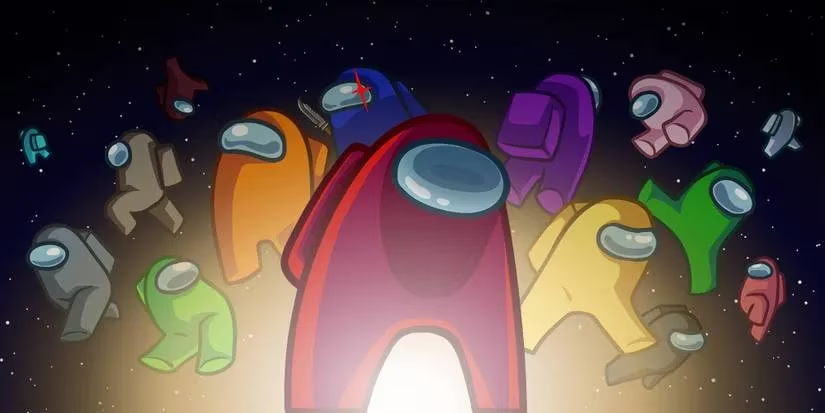
What's its secret? Consistent, fun updates and an incredibly active modding community. Remember the launch of The Fungle map? It was packed with secrets, new tasks, and Easter eggs that gave veterans a whole new world to explore. Collaborations with franchises like Hololive constantly bring in new waves of players. And let's not forget the fan-made modes like "Hide and Seek" that keep the core gameplay loop feeling new. The simple act of completing tasks while watching your back for the Impostor remains one of the most effective recipes for fun and frustration in gaming.
Why Do We Keep Coming Back?
So, what is it about these games that gives them such longevity? I think it's a perfect storm of factors:
-
The Human Element: No AI can replicate the thrill of outsmarting (or being outsmarted by) another person. The drama is real.
-
Short, Sweet Sessions: Most matches are 10-20 minutes, making them perfect for quick gaming fixes.
-
Evergreen Social Fun: They are fundamentally games about communication and friendship (or the hilarious destruction thereof). That never gets old.
-
Community & Creativity: Dedicated players and modders create new maps, roles, and modes, effectively giving these games endless DLC.
In 2026, the social deduction genre is healthier than ever. Whether you're a spy in a suit, a goose in a spacesuit, or a survivor in a snowstorm, there's a game out there waiting to test your trust and your wit. So gather your friends, try to keep a straight face, and remember—it's always the person who accuses someone else first. Or is it? 🤔
Data referenced from Newzoo helps contextualize why social deduction staples like Among Us, Goose Goose Duck, and Town of Salem can still feel “alive” in 2026: these games thrive when they deliver repeatable short-session engagement, strong community-driven retention loops (mods, role variants, creator nights), and low friction for friend-group onboarding across platforms. That mix of accessibility plus endlessly variable human behavior creates the kind of durable play pattern that keeps lobbies filling long after the initial hype fades.