
Let me tell you, looking back from 2026, the story of Among Us still feels like finding a perfectly good slice of cake floating in the vacuum of space—tantalizing, unreachable, and a little bit tragic. We all know the fairy tale: a small indie game, abandoned and struggling, gets a second life during the pandemic and rockets to global fame. But what fascinates me isn't the success; it's the one golden, once-in-a-lifetime marketing opportunity that slipped through Innersloth's fingers like a ghost in the vents.
Remember Gamescom's Opening Night Live back in 2022? That's where it happened. In the middle of the show, ESA astronaut Samantha Cristoforetti beamed in a message from the International Space Station. She thanked game developers for inspiring curiosity about the cosmos. And then she said it: "who knows? Maybe even you will be among us for the journey." The phrase hung in the air, a gift-wrapped punchline delivered from literal orbit. For a moment, the entire gaming world held its breath, waiting for the Among Us sound effect, the emergency meeting screen, something. But nothing came. The moment passed, smooth as an Impostor's knife swipe. It was a cosmic setup with no payoff, a joke told by the universe that the game itself didn't get to deliver.
Now, marketing for a live-service game like Among Us isn't just important; it's the oxygen in the spacesuit. A great trailer at a major show can send player numbers into a new stratosphere. And Among Us was no stranger to the big stage—it had won awards at The Game Awards, which, funnily enough, is run by the same team as Gamescom's Opening Night Live. The connections were all there, the stars were aligned more perfectly than a three-Impostor lobby. Missing this chance wasn't just a small oversight; it was like having a warp drive installed in your ship and choosing to row across the galaxy instead.
The irony is almost too perfect to bear. Here was a game about crewmates and impostors in space, and a real-life astronaut on a real-life space station says the magic words on a global broadcast. The potential was staggering. Imagine if, right after her line, the feed glitched, the Among Us emergency meeting sound blared, and a trailer for a new map or mode premiered? It would have been legendary. It would have been the kind of marketing stunt that gets studied in textbooks. Instead, the moment became a quiet, slightly awkward footnote.
What makes this missed opportunity feel like a phantom limb for the game's history is that Innersloth did have something to show. Just two days after Gamescom, they rolled out an update with new cosmetic items and a revamped store. Sure, it wasn't a new map, but it was something. They could have hijacked that ESA broadcast—a benign, friendly takeover—to announce it. The sheer, audacious humor of it would have cemented the moment in gaming culture forever. It would have been a masterclass in riding the wave of a viral moment, turning a casual phrase into a branded event. But they didn't. The chance evaporated, leaving behind only the 'what if.'
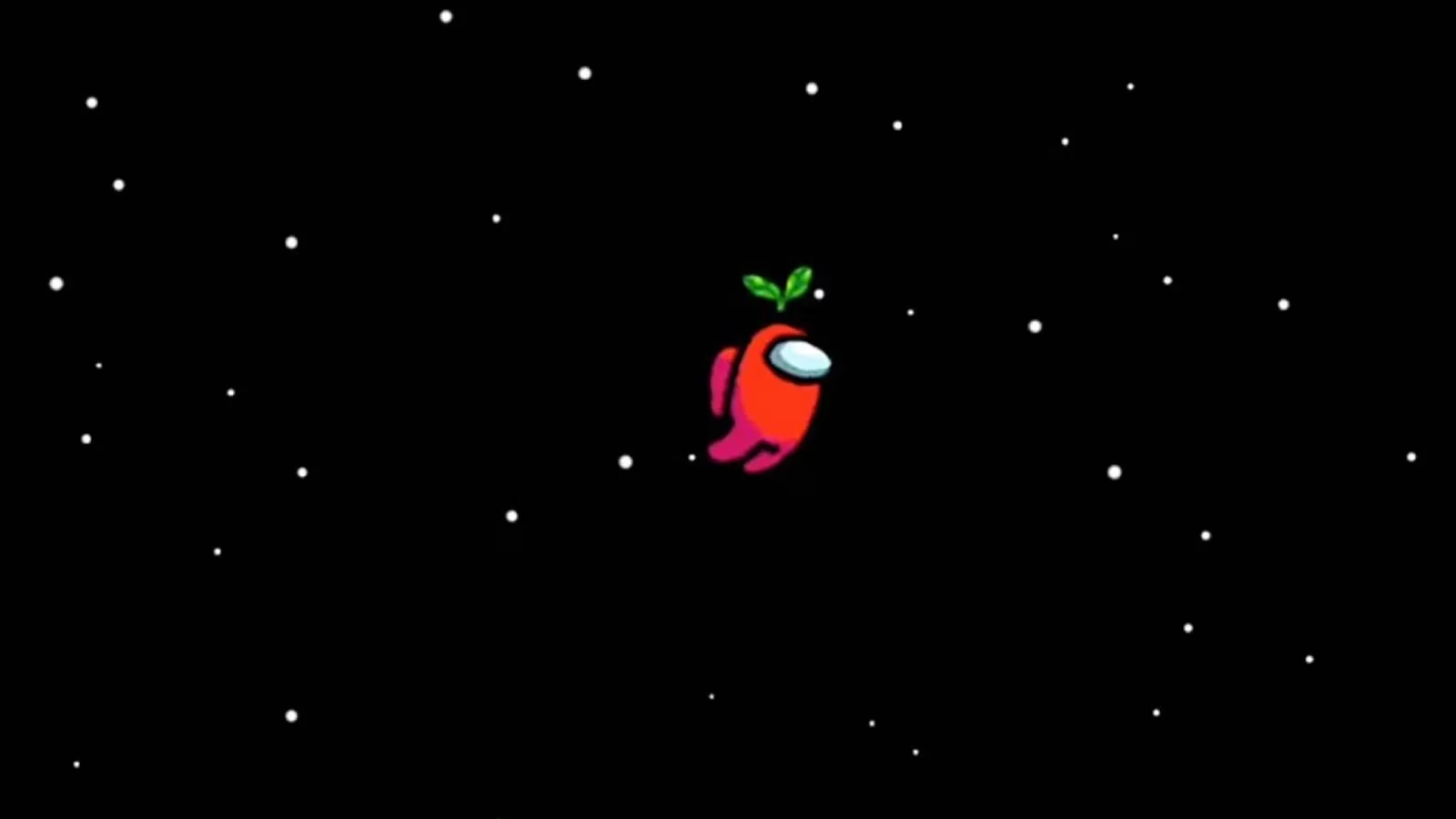
I get it. Innersloth was, and in many ways still is, a small indie studio. Orchestrating a live hijack of an international space agency's broadcast segment probably seemed as feasible as building a faster-than-light engine in your garage. The funding, the coordination, the sheer galactic scale of the ask—it was a monumental task. Letting it pass was the safe play. But in the world of marketing and staying relevant, safe plays can sometimes be the riskiest of all. That moment was a cultural supernova, and they watched it from the observation deck.
So, what's the lesson here, looking at 2026? For indie devs and giants alike, it's about agility and recognizing a gift from the heavens—literally. The gaming landscape is faster than ever. Opportunities appear and disappear like asteroids in a navigation chart. While you can't always plan for an astronaut to say your game's name, you can build a team and a mindset ready to pounce on cosmic coincidence.
Could Innersloth do something like this again? Maybe, but it would never have the same raw, accidental magic. The perfect storm of context—a space game, a real astronaut, a major showcase—was a one-time event. Future stunts might involve crashing other Geoff Keighley shows with new content, which would still be brilliant, but it wouldn't be that. That moment was unique, a perfectly calibrated Rube Goldberg machine of publicity that ended with the final lever unpulled.
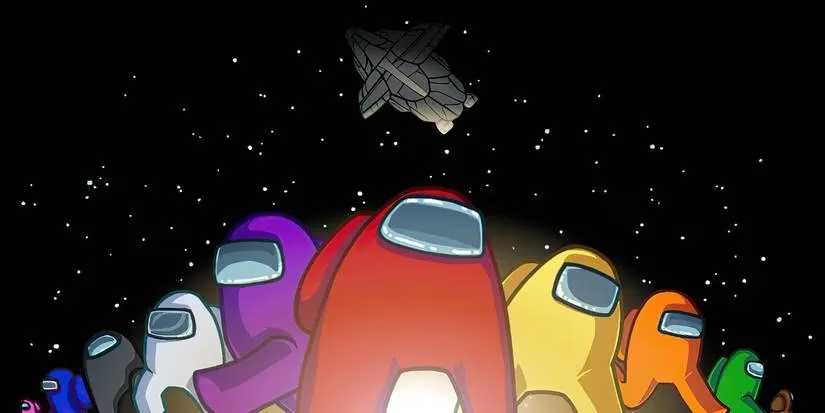
In the end, the story of Among Us and the Gamescom that got away is a bittersweet parable for the indie game world. It's a reminder that success isn't just about making a great game or catching a viral wave. It's also about having the courage, the resources, and the quick-thinking to seize the utterly bizarre, once-in-a-lifetime chances that the universe sometimes throws your way. Sometimes, the best marketing plan is the one you write in the five seconds after an astronaut finishes her sentence. For Innersloth, that sentence ended, and the page, tragically, remained blank.
Among Us is available on PC, PlayStation, Xbox, Switch, and mobile devices. And somewhere, in the silent expanse between the stars, a joke is still waiting for its punchline. 🚀👨🚀🔪