
Video games, as a medium of interactive fantasy, have long provided players with the opportunity to explore the darkest corners of human nature, often through the lens of serial killers. These narratives span a wide spectrum, from gritty detective mysteries where players hunt the perpetrator, to brutal horror experiences where one embodies the killer. As of 2026, the fascination with these chilling characters remains potent, evolving with new titles and enduring classics that continue to dissect the psychology, mythology, and sheer terror associated with serial murder. The following exploration highlights some of the most impactful games in this subgenre, examining how they utilize the interactive format to immerse players in stories of death, mystery, and survival.
10. Saw: The Puzzle of Survival
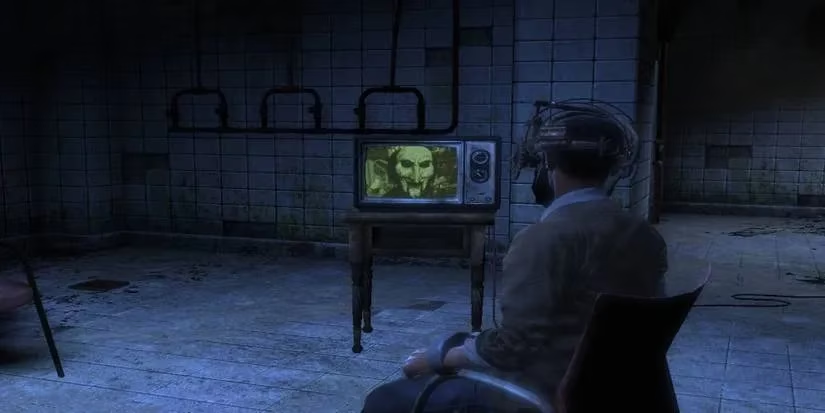
In the Saw video game adaptation, the antagonist Jigsaw occupies a unique space between serial killer and malevolent puzzle master. His methodology defines the experience. He never directly murders his victims. Instead, he constructs elaborate, deadly traps and moral quandaries, forcing them to fight for their own survival. This core concept translates directly into the gameplay, where players must navigate a nightmarish warehouse, solving intricate puzzles to escape. While Jason Voorhees or Michael Myers might chase you with a blade, Jigsaw's threat is omnipresent and psychological. His voice echoes through the halls, and his traps are his weapons. The game masterfully creates tension not from direct pursuit, but from the constant, looming pressure of his twisted games, making every choice a matter of life and death.
9. Sherlock Holmes Vs. Jack The Ripper: Fact Meets Fiction
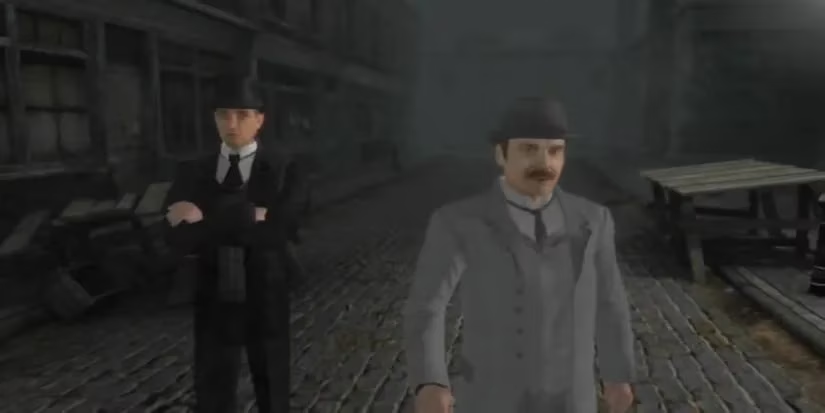
Rarely do games directly tackle real-life serial killers, but Sherlock Holmes Vs. Jack The Ripper is a notable exception. The enduring mystery and mythology surrounding the Whitechapel murders have almost transformed Jack the Ripper into a figure of folklore. This game cleverly bridges fact and fiction by pitting the world's greatest fictional detective against history's most infamous unidentified killer. As an early entry in the Frogwares Sherlock Holmes series, it was notable for its ambitious approach, presenting and investigating several historical theories about the Ripper's identity. Players step into Holmes's shoes, using deduction and crime scene analysis in the foggy, gaslit streets of London. The game's strength lies in its atmospheric recreation of Victorian London and its respectful, yet creative, engagement with a true-crime legend.
8. Fahrenheit (Indigo Prophecy): A Descent into Madness
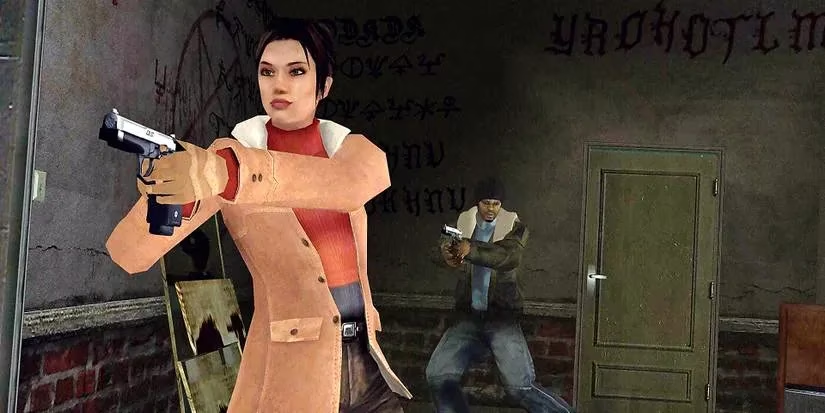
Fahrenheit (known as Indigo Prophecy in North America) represents a profound shift in perspective. This game is less about action and more about the terrifying psychology of becoming a killer. The narrative is the undisputed star. Players experience a dual perspective: one moment controlling Lucas Kane, an ordinary man who commits a murder while in a trance-like state, and the next controlling the detectives hunting him. The game's innovative, cinematic presentation and choice-driven narrative allow players to viscerally experience Lucas's psychological breakdown, his fear, and his struggle to understand the supernatural forces compelling him to kill. It’s a gripping exploration of guilt, possession, and the loss of self-control, making the player an intimate participant in the killer's fractured mind.
7. The Wolf Among Us: A Noir Fairytale Mystery
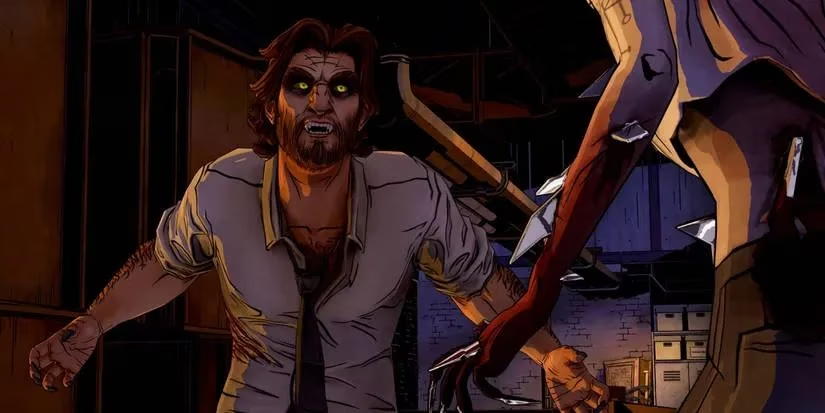
Telltale Games' The Wolf Among Us frames its serial killer narrative within a brilliant neo-noir premise: fairy tale characters ("Fables") living in a hidden, gritty district of New York City. Players assume the role of Bigby Wolf, the sheriff, who must investigate a series of gruesome murders. The genius of the setup is its subversion of familiar stories. Victims and suspects are drawn from classic tales—Snow White, the Woodsman, Beauty and the Beast—but their lives are fraught with poverty, crime, and desperation. The serial killer mystery serves as the catalyst to explore this richly flawed world. The Telltale formula of dialogue choices and quick-time events focuses the experience on narrative consequence and character drama, making the eventual unveiling of the killer a deeply impactful story beat rooted in the game's unique lore.
6. L.A. Noire: The Black Dahlia Inspiration
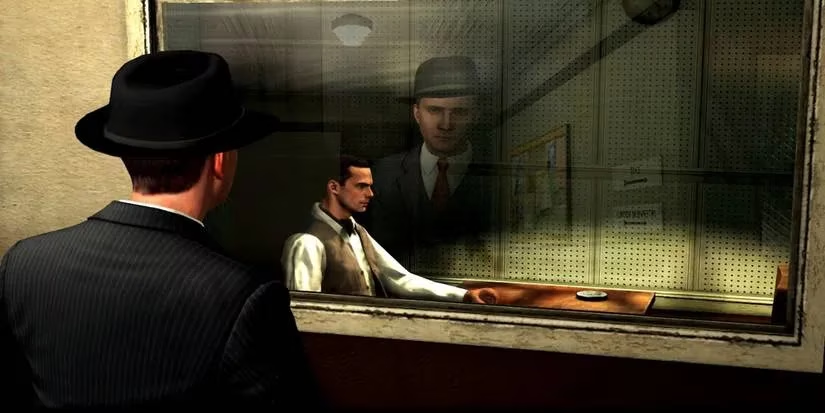
L.A. Noire is a masterclass in period-piece detective work, and one of its most memorable cases is directly inspired by a real-world serial killer. While the game features a series of self-contained cases, the "The Black Caesar" arc is a clear analog to the infamous Black Dahlia murder that haunted 1940s Los Angeles. Rockstar and Team Bondi didn't shy away from the gruesome details, crafting a case that captures the era's morbid fascination with the crime. As Detective Cole Phelps, players must comb through crime scenes, interrogate witnesses with the game's pioneering facial animation technology, and piece together evidence. This case stands out for its grim atmosphere and its commitment to emulating the haunting reality of a notorious, unsolved murder, showcasing how video games can engage with true crime history in a compelling, interactive way.
5. Murdered: Soul Suspect: Solving Your Own Murder
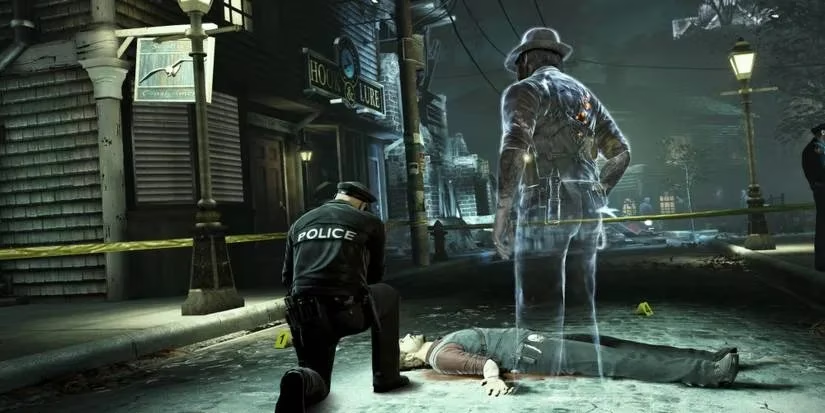
Murdered: Soul Suspect presents a brilliantly inverted premise. You play as Ronan O'Connor, a detective murdered by the serial killer known as the "Bell Killer." Instead of the story ending, it begins anew with Ronan as a ghost, trapped in the liminal space of Salem. His new goal: use his spectral abilities to solve his own murder and bring his killer to justice, thereby finding peace. This twist reframes the entire detective genre. Players must possess people to read their thoughts, teleport short distances, and influence the physical world to leave clues for the living detective now on the case. The story compellingly blends supernatural mystery with a personal vendetta, and the gameplay mechanics directly support the narrative of a detective who must now work from beyond the grave to finish his final case.
4. Manhunt: The Controversial Simulator
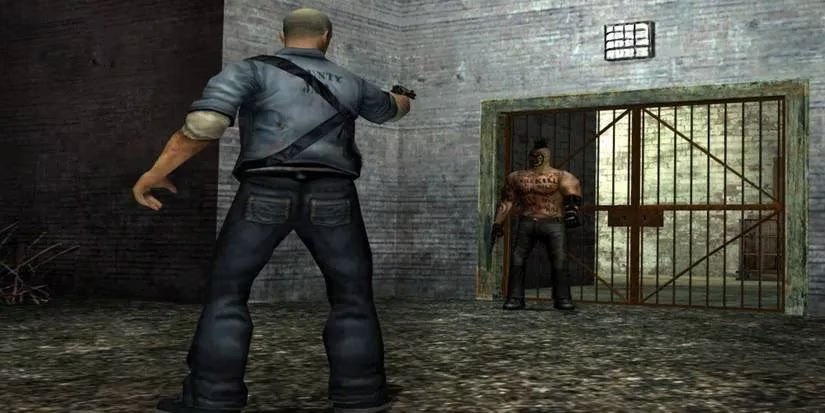
Upon its release, Manhunt ignited a firestorm of controversy that still defines its legacy. Developed by Rockstar, the game strips away complex plot, placing players in the role of a death row inmate forced to fight through hordes of gang members in a snuff film. The gameplay is brutally simple: stealthily execute enemies in increasingly graphic ways to earn higher "director's ratings." The game's singular, uncompromising focus on visceral, sadistic violence made it a lightning rod for criticism. It barely functions as a traditional serial killer narrative; instead, it makes the player complicit in the acts, simulating the role of a tool for a deranged director. While its gameplay mechanics are rudimentary, Manhunt remains a landmark in video game horror for its sheer, unadulterated commitment to nihilistic brutality and its commentary on media consumption of violence.
3. Condemned: Criminal Origins: First-Person Horror
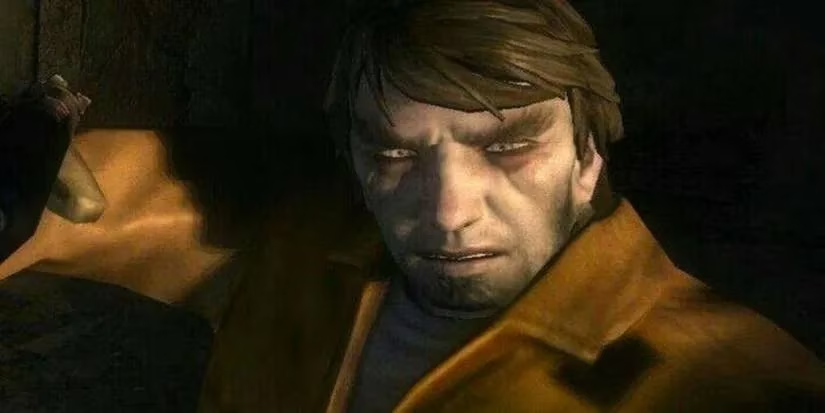
The Condemned series, particularly its first entry, Criminal Origins, plunges players into a first-person nightmare of psychological and physical horror. As FBI agent Ethan Thomas, you are not only hunting a serial killer but are also framed for murder, becoming a fugitive yourself. The game's most terrifying antagonist is Leland Vanhorn, a sadistic killer who revels in toying with Ethan. The combat is raw and visceral, emphasizing improvised melee weapons like pipes and planks in dimly lit, derelict environments. Condemned excels at creating an atmosphere of palpable dread. It explores the cult-like fascination with violence and the psychological toll of the hunt, making the player feel both the fear of the pursued and the desperation of the hunter. The sound design and oppressive environments make every encounter a heart-pounding experience.
2. Heavy Rain: The Origami Killer's Legacy
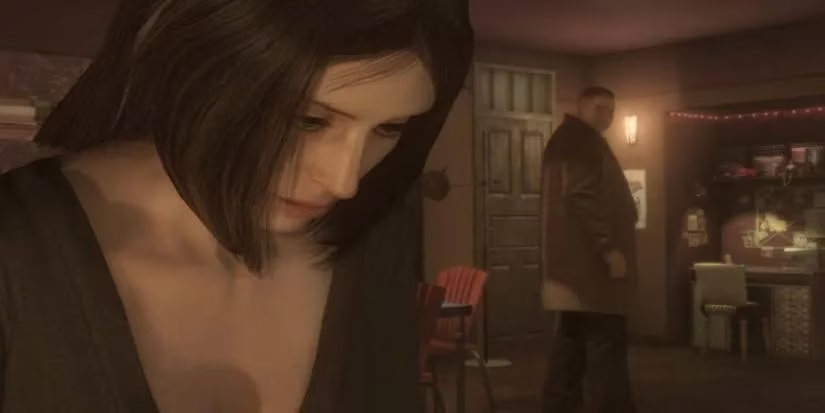
Building on the narrative foundation of Fahrenheit, Heavy Rain is an interactive drama where the story of a serial killer is woven through the lives of four protagonists. The "Origami Killer" is a masterclass in villain mythology. His signature—leaving origami figures at crime scenes—and his method of drowning victims during heavy rains create a powerful and haunting motif. Players don't control the killer; instead, they control a father searching for his son, a journalist, a private investigator, and an FBI agent, each with their own connection to the case. The game's branching narrative, driven by player choices and quick-time events, means the identity of the killer and the fates of all characters are not predetermined. This creates immense tension and personal investment, as players race against time to solve the mystery and save a child's life.
1. Friday the 13th: The Game: Becoming the Legend
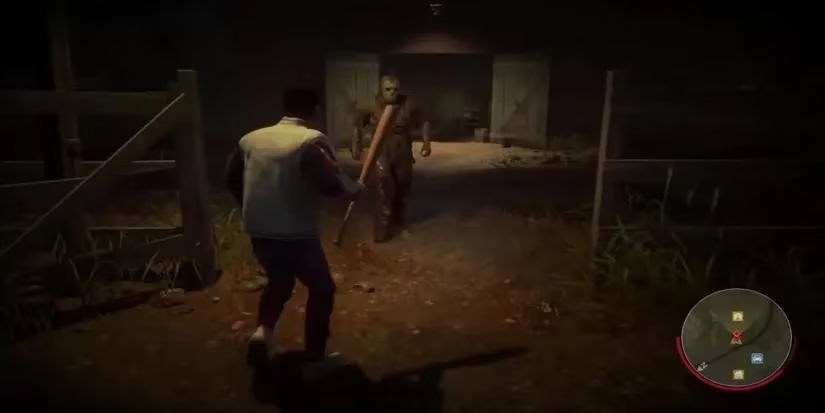
While most entries on this list feature human killers, Friday the 13th: The Game celebrates the iconic, supernatural serial killer: Jason Voorhees. This asymmetrical multiplayer game perfectly captures the essence of being the unstoppable force of nature from the films. One player assumes the role of Jason, equipped with his vast arsenal of abilities—teleportation, super strength, and environmental traps—to hunt down a group of player-controlled camp counselors. The power fantasy of embodying Jason is immense. Stalking the campgrounds of Crystal Lake, breaking down doors, and executing counselors in brutal fashion makes players feel the relentless terror Jason represents. Conversely, playing as a counselor is a pure survival horror experience of teamwork, stealth, and panic. The game also features single-player challenges that recreate iconic movie moments, solidifying its status as the ultimate interactive tribute to one of horror's most prolific killers.
| Game Title | Killer / Antagonist | Core Gameplay Hook |
|---|---|---|
| Saw | Jigsaw | Escape elaborate, deadly puzzle traps. |
| Sherlock Holmes vs. Jack the Ripper | Jack the Ripper | Investigate historical theories as Sherlock Holmes. |
| Fahrenheit | The possessed Lucas Kane | Experience a dual narrative from killer and detective perspectives. |
| The Wolf Among Us | A mystery killer in Fabletown | Make narrative choices in a noir fairytale detective story. |
| L.A. Noire | The Black Caesar (inspired by Black Dahlia) | Use interrogation and investigation in a 1940s detective sim. |
| Murdered: Soul Suspect | The Bell Killer | Solve your own murder using ghostly powers. |
| Manhunt | Various gang members / The Director | Execute stealth kills in a brutal snuff film scenario. |
| Condemned: Criminal Origins | Leland Vanhorn | Engage in visceral melee combat while solving crimes. |
| Heavy Rain | The Origami Killer | Guide four characters in a branching narrative mystery. |
| Friday the 13th: The Game | Jason Voorhees | Play as the killer or a counselor in asymmetrical multiplayer. |
The enduring appeal of serial killer narratives in video games lies in their ability to explore extremes: the depths of human psychology, the thrill of the hunt, the terror of being hunted, and the chilling charisma of evil. From psychological deep dives like Fahrenheit to the primal horror of Friday the 13th, these games use interactivity to create experiences that are as thought-provoking as they are terrifying. As technology advances, future titles will undoubtedly find new and even more immersive ways to explore this dark, fascinating corner of storytelling.