
When digital worlds collide with inky panels, the result often feels as natural as Mario stomping a Goomba. For decades, Japanese-born heroes like Sonic, Mega Man, and Street Fighter have leaped from consoles to Western comic shelves with swagger, spawning runs that fans still debate between slices of pizza. But what happens when the current reverses, and western video games don a kimono of manga? It’s a journey rarer than an honest politician in Night City—a bit awkward, occasionally glorious, and always fascinating. Here’s a look at a handful of western franchises that dared to get serialized in Japan, with results that range from sublime to entertainingly unhinged.
Watch Dogs: Tokyo – Hacking the Rising Sun
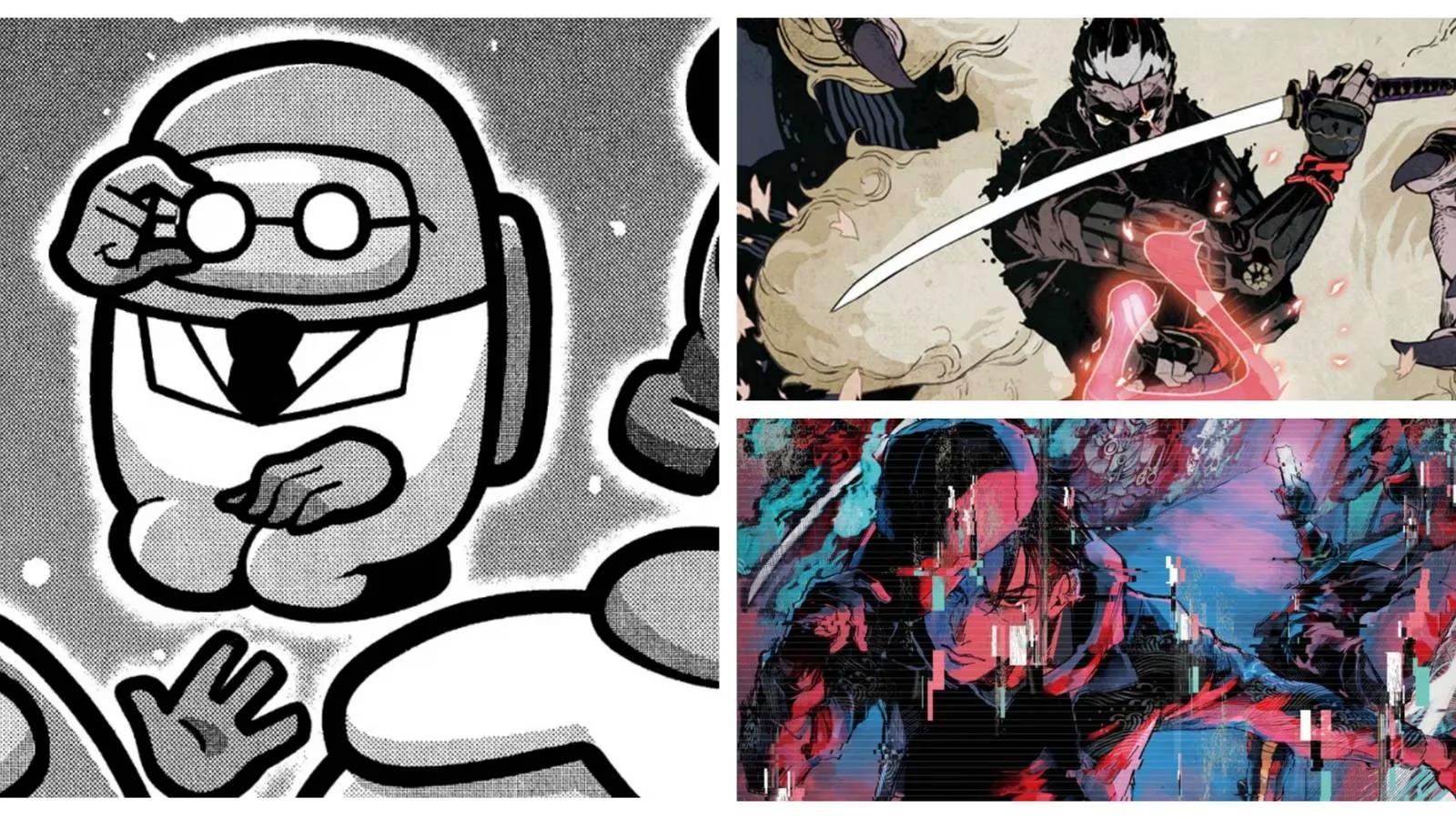
Ubisoft’s hoodie-wearing hackathon took a sharp detour from Chicago and London into the neon-drenched streets of Japan’s capital in Watch Dogs: Tokyo. Launched digitally on the Kurage Bunch website in April 2022, this manga saw the franchise undertake a cultural transplant as smoothly as a sumo wrestler performing ballet. Written by Shirato Seiichi (story advisor for Judgment) and drawn by Kamo Syuhei (GANGSTA: CURSED), the series pits a new cast against the ominous Bloom Corporation, weaponizing their own infrastructure system like a digital jiu-jitsu move.
By 2026, the manga has become a curious footnote: its Japanese run wrapped up cleanly, yet an official English release remains as elusive as a stealthy DedSec agent. Western fans have been subsisting on fan translations and wishful thinking, while scholars of transmedia storytelling point to Tokyo as a fascinating experiment—a western game retelling that absorbed Tokyo’s moody rain-slicked ambiance so thoroughly, you’d half expect a yakuza underboss to pop out of a manhole. The pedigree was there, yet the series never quite crossed the Pacific, leaving it stranded like a bullet train ticket mailed to someone who only rides the CTA.
Assassin’s Creed: Blade of Shao Jun – Stealth in the Ink Rain
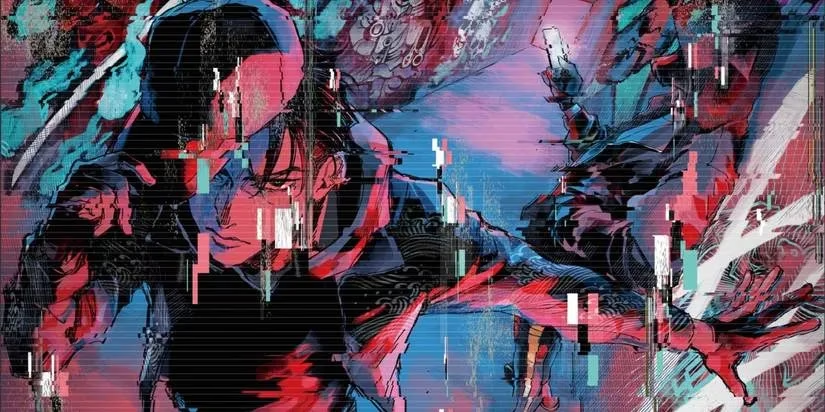
If Watch Dogs was a tentative first date, Assassin’s Creed: Blade of Shao Jun was the full-blown courtship. Serialized in Monthly Sunday Gene-X from 2019 to 2021, this manga followed Shao Jun’s vengeful return to Ming Dynasty China, neatly connecting the dots between her video game appearance in Assassin’s Creed Chronicles: China and the larger Creed mythos. Minoji Kurata’s pen breathed fatal grace into every hidden blade strike, making the story flow like an ink-wash painting that suddenly bites.
The series earned the rare distinction of being officially translated into English by Viz Media, with all four tankōbon volumes hitting shelves by mid-2022. Today, in 2026, it’s considered a gateway drug for manga-curious gamers, praised for explaining the Assassin-Templar conflict without dragging down the pace—a bit like a kung fu movie that also gives you a decent history lesson. Critics noted its appeal to both hardcore fans and newcomers who couldn’t tell a Piece of Eden from a paperweight. That universal charm has kept Blade of Shao Jun on recommendation lists, proof that when western lore meets eastern execution, the result can be sharper than a Katana forged in Animus flames.
The Witcher: Ronin – Gerald’s Haiku of Steel
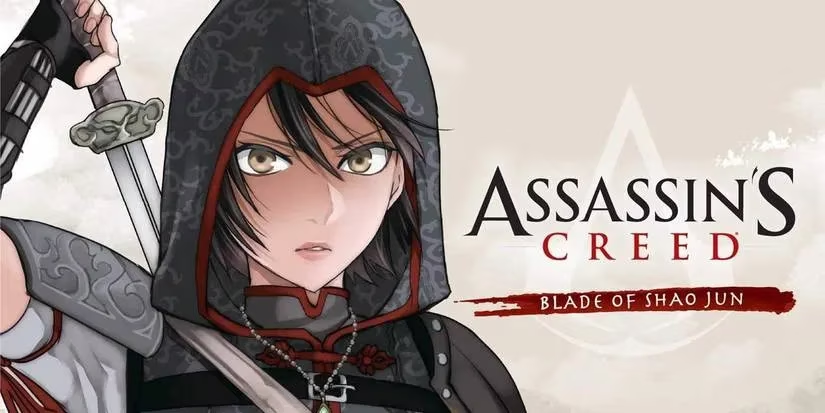
Just when fans thought Geralt of Rivia had exhausted every monster-hunting niche from Toussaint to Kaer Morhen, along came The Witcher: Ronin. This 2022 Kickstarter darling whisked the White Wolf into a mythic Japan-esque realm where he chases a Yuki-Onna, swapping Slavic grumpiness for a wandering ronin’s stoic frown. Written by Rafal Jaki and drawn by Hataya, the manga was a love letter wrapped in a hardcover collector’s edition, complete with extra stories and a making-of delight that backers gobbled up faster than a noonwraith devours poor souls.
By 2026, Ronin has blossomed into a cult object—a non-canon side quest that somehow feels more authentic than half the Netflix subplots. Imagine a pierogi stuffed into a sushi roll; it shouldn’t work, yet the flavors meld into something unexpectedly delicious. The manga’s English and Japanese editions both found their audiences, and its legacy spawned fan art of Geralt dueling oni while muttering haiku about killing monsters. For all its oddball premise, Ronin proved that even a jaded monster slayer can learn new tricks when the brush stroke is elegant enough.
Among Us – One-Shot of Suspicion Amid the CoroCoro Chaos
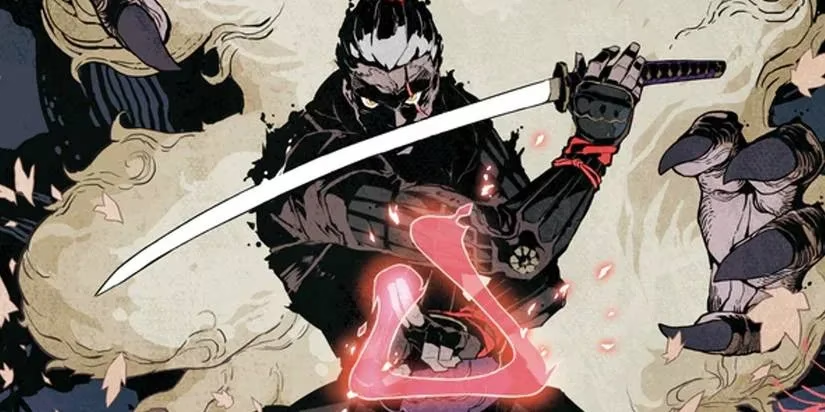
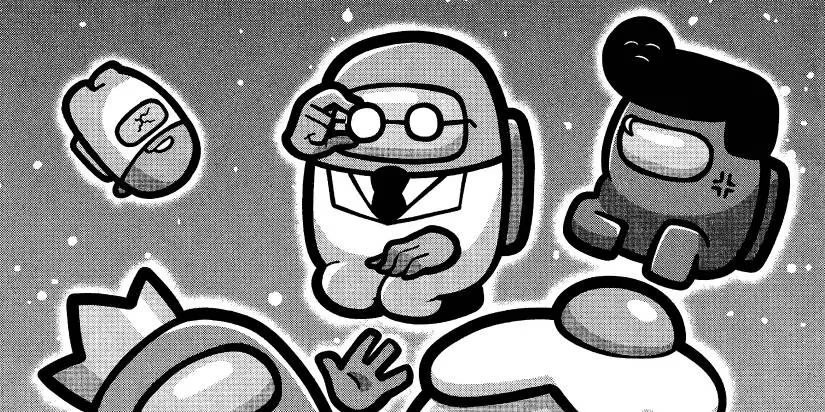
Yes, that Among Us—the pandemic-era party game that turned color-coded crewmates into household suspects—also infiltrated Japanese manga. In the April 2022 issue of Bessatsu Corocoro, a single one-shot appeared that was as meta as a snake swallowing its own spacesuit. The premise: five crewmates play their own game of Impostor, but the real drama unfolds in their daily lives as Tamago the Impostor schemes to win and eliminate his pals. It was as if a school club activity accidentally booked a murder mystery dinner and nobody remembered to bring the murder.
The humor was pure slapstick, aimed squarely at the same kids who devour Doraemon and Yo-Kai Watch. By 2026, this one-shot has become a trivia night favorite among Among Us diehards—proof that even a tiny, absurd manga can cement a franchise’s cultural footprint. While it was never destined to become a Berserk-esque epic, its very existence showed how far a scrappy indie game had traveled. A Japanese publisher, better known for beloved mascots, gave a band of bean-shaped astronauts a spot in its hallowed pages. That’s like inviting a rubber chicken to a formal tea ceremony and watching it steal the show.
Crash Bandicoot: Dansu! De Jump! Na Daibouken – The Talking Marsupial Who Ate ‘Apple-Chan’
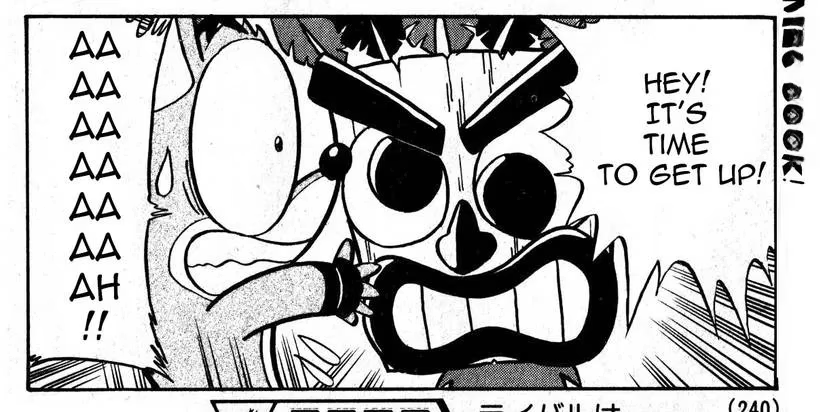
Long before the orange bandicoot spun into modern remakes, he stumbled into a Japanese manga serialization that ran from December 1997 to February 1999 in Corocoro Comics. Written and drawn by the late Kawashima Ari, Crash Bandicoot: Dansu! De Jump! Na Daibouken loosely followed Crash Bandicoot 2: Cortex Strikes Back but made one seismic change: Crash could talk. And talk he did, with a personality that leaned into the games’ comedic slapstick like a marsupial on a sugar rush.
Die-hard fans still wince at the infamous “Apple-Chan” for Wumpa fruit, a localization misstep that would make any self-respecting N. Sanity Island resident facepalm. Yet for the Japanese kids of the late ’90s, the manga delivered exactly what they wanted: a goofy hero collecting power stones while juggling Dr. Cortex’s manipulation and Dr. N. Brio’s counterplots. In 2026, surviving copies of Crash Bandicoot manga are treated like dusty fossils from a bygone era, quirky relics that prove mascot platformers didn’t just invade Japan—they got a full makeover complete with a giggling, chatterbox protagonist. It remains a time capsule of joyful weirdness, akin to finding out your favorite silent movie star once hosted a variety show in a clown nose.
These five titles form a mosaic of cultural cross-pollination—sometimes a home run like Shao Jun’s assassination ballet, sometimes a charming oddity like a talking bandicoot namedropping fruit. In an era where transmedia is king, the manga-verse continues to welcome western games with open arms and occasional bemusement. Whether gripping or giggle-inducing, each adaptation whispers the same truth: even a pixel-born hero can find a second life in the realm of rising sun and infinite panels.