
I still remember the electric shiver that ran down my spine when the trailer for The Wolf Among Us 2 finally dropped back in 2022. After years of silence, seeing Bigby and Snow White again felt like reconnecting with old friends I’d lost touch with. Now, in 2026, with the game fully released and poured over by fans, I find myself returning not just to the mystery but to the character who truly anchors this noir fairy tale: Snow White. She’s not a delicate princess waiting for rescue—she’s a hardened deputy mayor who can out-stare a wolf and outsmart a bureaucrat. But how did this familiar storybook figure become such a formidable presence? And why does her journey in the game still resonate so deeply?
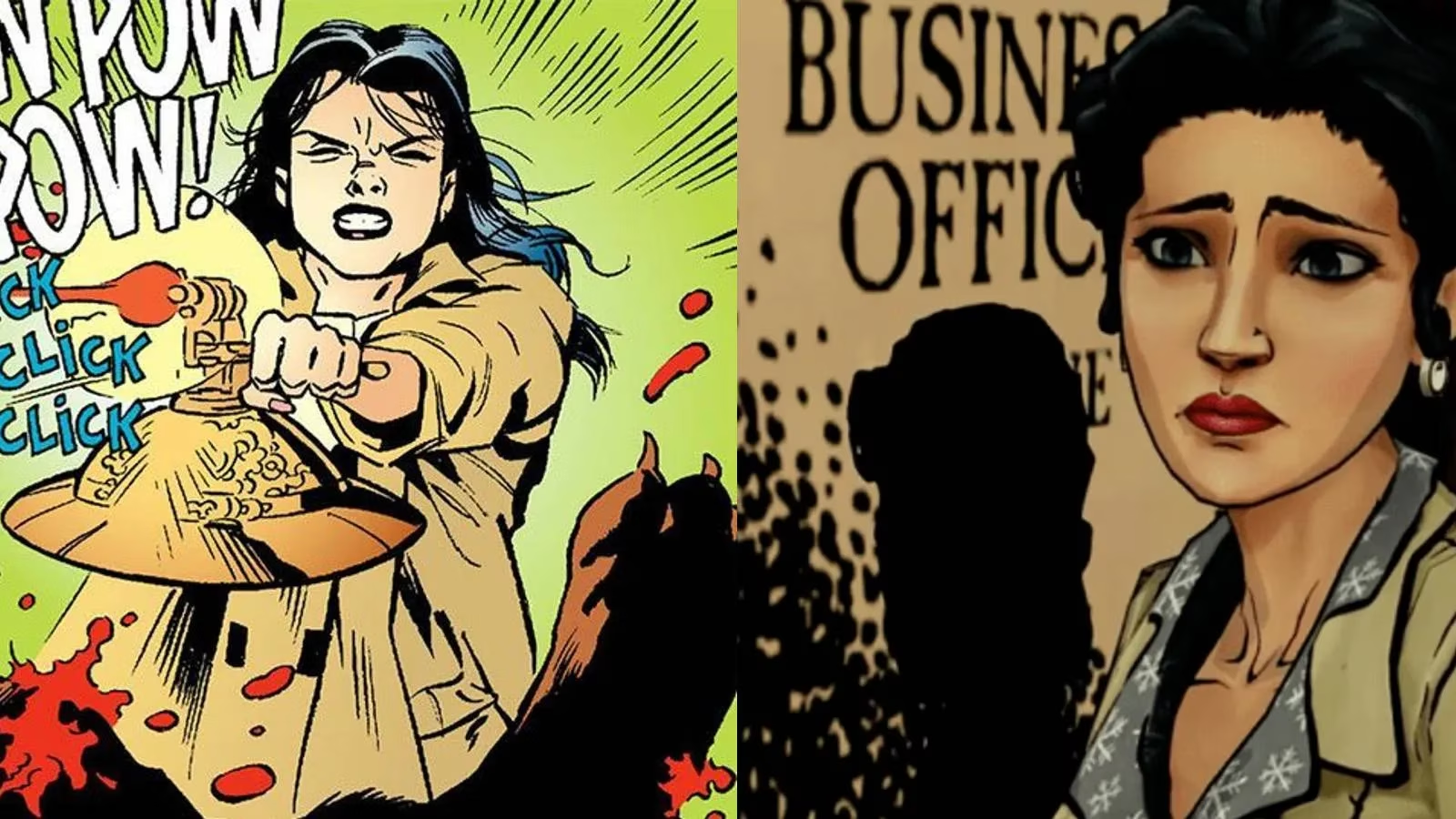
Before I ever picked up a controller, I knew Snow White as the singing Disney princess or the innocent victim of a poisoned apple. That image shattered the moment I started playing Telltale’s adaptation. The Wolf Among Us doesn’t just borrow from the Fables comics; it lifts its Snow White—often called Snow—straight from those pages, where her past is a tapestry woven with trauma, vengeance, and a relentless drive to survive. Born in a magical cottage with her twin sister Rose Red, Snow’s childhood was stolen early. After her mother faked her death to protect her, Snow ended up in the home of a cruel aunt, and later, with seven dwarves who enslaved her. This isn’t the cheerful cottage from the animated film. In the Fables universe, she was a sex slave to the dwarves, an ordeal that forged her into steel. When she escaped and married Prince Charming, her first request wasn’t for a ball gown—it was for fencing lessons. “Never again defenseless,” she might have thought. I can’t help but ask: how many of us, faced with such horrors, would turn pain into that level of proactive fury?
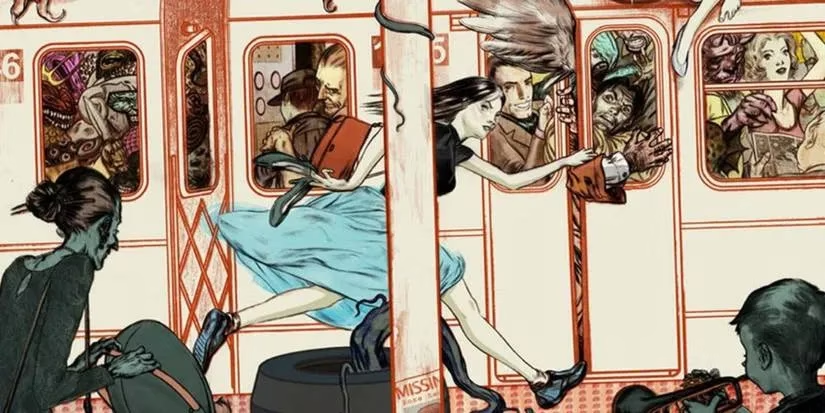
That fury manifests as a chillingly calm demeanor in the games. When I see Snow in The Wolf Among Us, I’m struck by her pedantic rule-following and bureaucratic coldness. She’s the one who scolds Bigby for breaking a suspect’s arm, who insists on proper procedure even as Fabletown teeters on chaos. It’s easy to label her as uptight, but doesn’t that discipline make sense? Her trust was systematically betrayed—by the dwarves, by her sister Rose Red (who seduced Prince Charming out of misplaced revenge), and by a world that punished her for existing. Her no-nonsense armor is exactly that: armor. Yet the first game only hinted at these depths. We got flashbacks and veiled references, but I always felt there was a locked room inside her character that the narrative hadn’t fully opened. The sequel finally gave us the key.
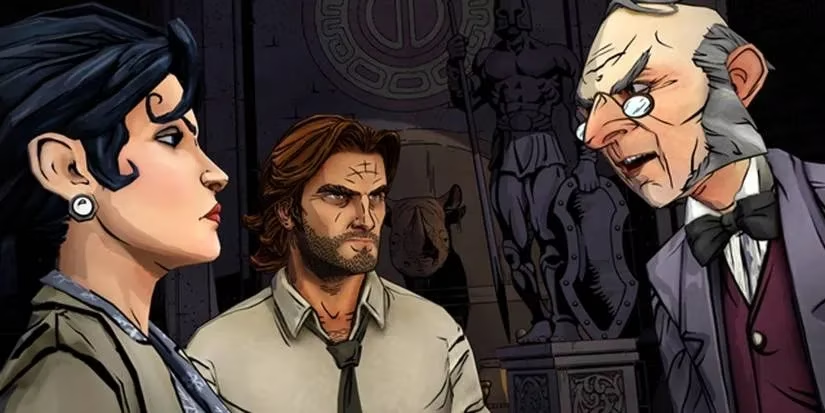
One aspect I obsessed over was her tangled relationship with Bigby Wolf. In the Fables comics, it’s a centuries-spanning love story. Snow was the only escapee who grabbed a sword against the Big Bad Wolf when he attacked their captor, only to watch him free them all instead. Later, she tracked him down with a lycanthropy-stained knife so he could take human form and join Fabletown—a peace offering that sparked an impossible bond. The comics show them falling in love, marrying, raising seven cubs. Telltale’s first season, however, kept that romantic spark ambiguous. It was there in the subtext, but player choice could fan it or smother it. With The Wolf Among Us 2 now in our hands, I’ve seen how the sequel navigates this. Does it follow the comics’ trajectory, or does it leave Bigby as a lone wolf? Without spoiling specific outcomes, the game respects player agency while weaving in more of Snow’s backstory—those Kill Bill-style vendettas against the dwarves, her fractured bond with Rose, her steely survival after being shot in the head by a mutinous Goldilocks (yes, that actually happens). It’s a richer, darker tapestry than I ever expected from a point-and-click adventure.
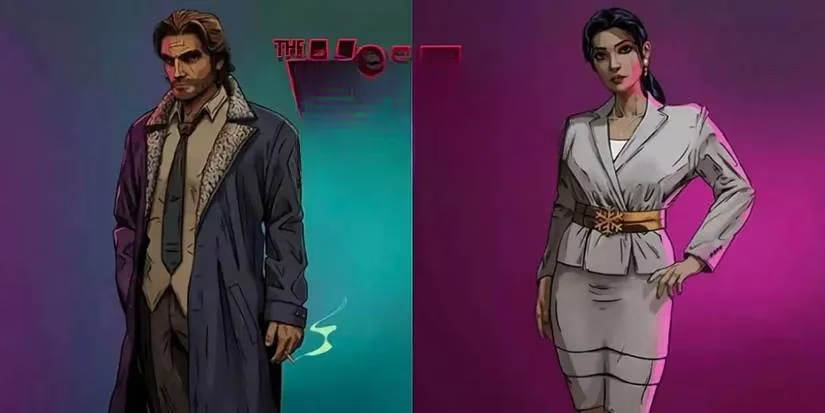
But here’s the thing: Snow White’s appeal isn’t just about her traumatic past or her will-they-won’t-they dynamic with Bigby. It’s about the way she embodies resilience without losing her moral compass. In the sequel, we see her as Deputy Mayor, a role she fully steps into by 2026’s timeline. New threats emerge—Wizard of Oz characters like the Tin Man and the Scarecrow appear, adding fresh layers to Fabletown’s fragile peace. Yet through it all, Snow remains the anchor, her resourcefulness balancing Bigby’s brute force. Watching her navigate political tightropes while silently carrying the weight of murdered dwarves and a sister’s betrayal, I often wonder: does she ever let that mask slip? The game answers that question in small, quiet moments—a tremor in her voice, a hesitation before she delivers a verdict. Those cracks are more compelling than any monster fight.
What struck me most revisiting the series in 2026 is how Telltale didn’t just adapt a fairy tale; they dissected the very idea of a “princess.” Snow White is a survivor forged by the worst of what humanity (and fairy tales) can offer, yet she chooses to build a community rather than burn it down. Her relationship with Rose, barely touched in the first game, gets the spotlight it deserves, forcing us to confront themes of forgiveness and familial rupture. And her history with Bigby—that ancient familiarity—lends every grumpy exchange an undercurrent of intimacy. It’s masterful storytelling that relies on the player to connect the dots, to feel the weight of centuries in a single glance.
As I put down the controller after the final chapter, I realized that Snow White had become my favorite anti-heroine in gaming. Not because she’s flawless, but because her flaws are earned. She’s pedantic, cold, and occasionally ruthless, yet she’s also fiercely loyal and unimaginably strong. The Wolf Among Us 2 granted my wish: to see her not as a side note in Bigby’s story but as a fully realized force in her own right. So the next time someone calls her just a fairy-tale princess, I’ll invite them to stand in Fabletown’s shadowed streets and ask themselves—would you dare cross her?